Once upon a time, the Life on Earth

Biological coaching, Delimitation cycle
Version française

To apply « Biological Coaching Life on Earth », you need to know the functional architecture of the system that we want to harmonize.

To evolutionize our obsolete political system towards a Fraternal Humanity, the system to be harmonized is: Life on Earth.

The physical reality of Terrestrial Life:
The goal to reach, the universal support, the master plans,
the actors

If we don’t know where we want to go, no matter where we are, we won’t get to our destination.

It is necessary to recognize the “principal” actors of the present history and to determine their connection with the master plans.

Life comes alive thanks to « closed spaces »

« Closed spaces » are the primary blocks that interact together, consciously or unconsciously, to create the physical reality of terrestrial life.

The “closed spaces” of the Terrestrial Master Plan

Natural ecosystems give the Earth its particularity compared to other planets.

The human being is an Ecosystem Creator.

What is immutable and What is terrestrial

The environment is the duality between
– The Universal Master Plan which contains the immutable laws of Life,
– The Terrestrial Master Plan which contains terrestrial laws.

While it is true that we are creator of ecosystems, we are not creator of « natural ecosystems », we sow there the needs and/or the desires which gave them life.


The nervous system, the intricate paths

Delimitation cycle

Cette page est également disponible en français.

When he gave his « I have a dream » speech in 1963, Martin Luther King was not to imagine that 45 years later, a black man would be President of the United States. This has not, however, changed the discrimination that some people have towards people who are different from themselves. Yet the strength of humanity is in the diversity of human beings that compose it.

Life will never be anything other than what we do with our lives.
« Oh my God! » by Tanya Wexler

The nervous system compiles information of a different nature in order to generate the best action that will maintain the integrity of the human body:

Always in threes, information travels

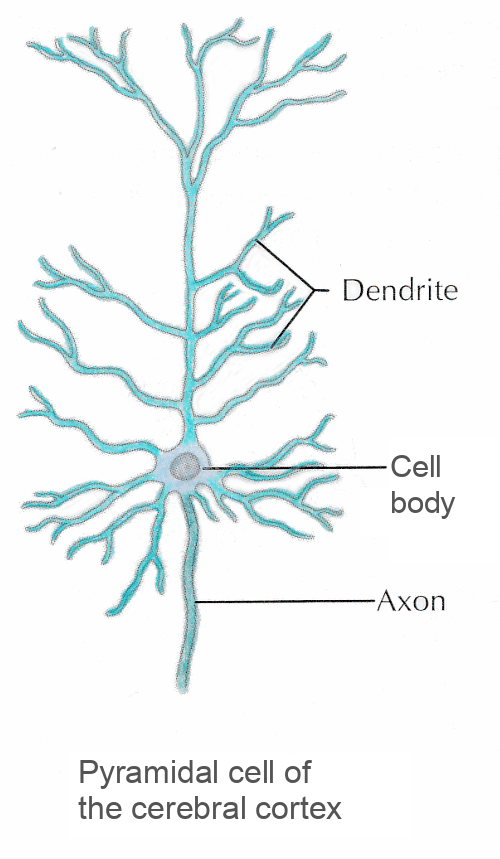
The structure of neurons -nerve cells- reflects its functional characteristics.

The neuron carries efferent information through an action potential:

  • Dendrites capture information from the external environment and propagate it to the cell body;
  • The cell body or pericaryon, soma, contains the nucleus, a single axon leaves it;
  • The axon carries information to target cells or another neuron, where it will pass it through specialized junctions called synapses.

Although the human nervous system has over 10 billion neurons (a more than rough estimate), they can nevertheless be classified into one of three functional types:

  • Motor neurons: carry efferent impulse from the central nervous system (CNS) or ganglia (a group of cell bodies of neurons outside of the CNS) to target cells (effectors).
    – Somatic efferent axons target skeletal muscle,
    – Vegetative efferent axons (visceral) target smooth muscle, heart muscle and glands.
  • Sensory neurons: carry related information from receptors to the CNS.
    – Afferent somatic axons carry pain, temperature, tactile sensations, pressure and proprioception (unconscious),
    – Vegetative (visceral) axons carry pain and other sensitivities (such as nausea) from the viscera, glands and smooth muscle to the CNS.
  • Interneurons: transmit information between sensory and motor neurons, thus forming an integrated network between cells. They probably make up over 99% of all neurons in the body.

In the CNS, axons are myelinated by an oligodendrocyte (a glial cell or neuroglia) while axons in the peripheral nervous system (PNS) are surrounded by a Schwann cell (a glial cell), without all being myelinated, but when they are, it is the Schwann cell that myelinates them.

Two signals for orientation

The nervous system is made up of two anatomical parts with specific roles:

  • The central nervous system (CNS): the brain and the spinal cord, it is the center of regulation and integration;
  • The Peripheral Nervous System (PNS): Cranial nerves, spinal nerves, and ganglia, these are the lines of communication between the CNS and the body. It splits into two ways:
    – The sensitive pathway (afferent) which contains somatic and vegetative neurofibers (axons and dendrites) and propagates nerve impulses from receptors to the CNS,
    – The motor pathway (efferent) which contains somatic and vegetative neurofibers and propagates nerve impulses from the CNS to the effectors (muscles and glands).
    The motor pathway will then divide into two with the somatic nervous system and the autonomic nervous system
    which in turn will split into two with the sympathetic nervous system and the parasympathetic nervous system.

Within the CNS, there is a fundamental binary distinction, concerning the distribution of synapses.

The gray matter:

  • It is a region where synapses (interneuronal connections) are established;
  • It contains all cell bodies, all CNS synapses, and capillaries;
  • The cells of the neuroglia (the supporting and protective cells of neurons) are: astrocytes, oligodendrocytes, microglia.

The white matter:

  • It is a region devoid of synapses;
  • It consists mainly of bundles of myelinated axons (grouping of bundles),
  • The cells of the neuroglia are the oligodendrocytes for the CNS; and Schwann cells for SNP.

The distribution of gray matter and white matter differs between the brain and the spinal cord:

  • In the brain, the gray matter is peripheral, it defines a cortex around the central white matter.
  • In the spinal cord, the gray matter and the cell bodies of the neurons that correspond to it are located in the central part of the spinal cord, where they describe a butterfly or H-shape that can be distinguished from the white matter around.

The SNP is made up of 31 spinal nerves that emerge from the spinal cord at the level of the vertebrae.

There are 8 cervical pairs, 12 thoracic pairs, 5 lumbar pairs and a coccygeal pair.

Each spinal nerve is formed:

  • From a ventral root: for the motor skills of the limbs,
  • From a dorsal root: for the sensitivity of the limbs.

The ventral branches converge to form plexuses.

Crosses to balance

A plexus is not much different from a large network of different rail tracks that connect into a main track such as a rail yard.

The nerve plexus is a mixture of nerve fibers originating from spinal nerves of adjacent levels, which ultimately distributes itself into several « terminal » nerve branches, which reach the peripheral regions and innervate its skeletal muscles, joints, and skin.

Nerve fibers are of three types:

  • Somatic motor nerve fibers to innervate skeletal muscles;
  • Sympathetic postganglionic nerve fibers intended to innervate the smooth muscle of hair follicles, vessels and sweat glands;
  • Sensitive nerve fibers to give the central nervous system information from the outside world, captured at the level of the skin.

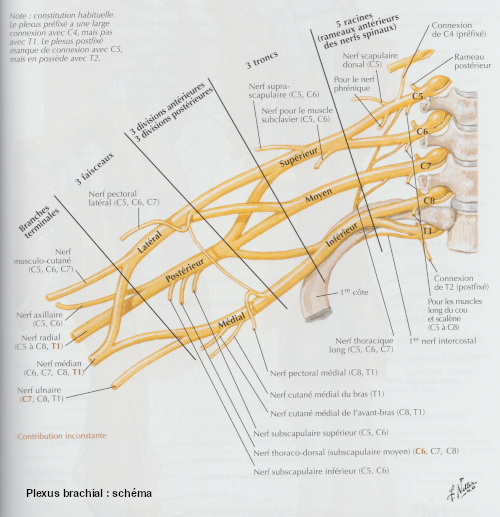
Here is an example of the description of the brachial plexus formed by the ventral branches of the C5-T1 spinal nerves:

  • The roots: The five ventral branches of C5-T1 constitute the “roots” of the plexus;
  • The trunks: The five roots reorganize into three upper, middle and lower trunks which engage under the collarbone in front of the first rib;
  • The divisions: Each trunk gives two divisions: an anterior division and a posterior division, and therefore six divisions in total;
  • The cords: the three posterior divisions combine to form the posterior cord, the medial and lateral cord are made up of the combinations of the anterior divisions;
  • Terminal branches: The plexus gives rise to five large branches that innervate the shoulder, arm, forearm and hand.

A number of small nerves arise from this organization (5-3-2-3-5) to innervate some muscles of the back, and of the anterior and lateral region of the rib cage.

Let’s use the foundation offered by a triangular base and the amplitude of binary complementarity in order to experience common happiness:

If the human body is able to coordinate all the information
that these sensors send him to take actions, without losing his balance,
by alternating a base containing 3 types of data and binary limits;

We can define scales at three levels for observing the world
{Global – National – Individual} {Private – Professional – Citizen};
and define binary signals to guide our common choices
{war – peace} {freedom – comfort};

Let’s try to keep the world in balance,
let’s decide together the vital signals to live in harmony.


Bibliographic references:
The information on the nervous system ies taken from:
– the book « The Netter’s Anatomy Coloring Book », John T. HANSE, Elsevier Masson SAS, 2017 (the french version),
– the first year medical course.
The picture of the neuron is taken from the book « The Netter’s Anatomy Coloring Book », John T. HANSE, Independently published, 2019 (the french version).
The picture of the brachial plexus is taken from the book « Atlas of Human Anatomy », Seventh edition, Franck H. NETTER, Elsevier Masson SAS, eBook.

The urinary system, the attention for synchronization

Delimitation cycle

Cette page est également disponible en français.

What gives us our humanity and differentiates us from animals is the emotions. They live in us, and turn us away from our will so easily. Misunderstood forces, which we refute because they make the impossible possible and achieve what we fear. If to live humanely, it was to look our emotions in the face, and stop hurting oneself by thinking doing good.

Imagine all the people living life in Peace.
John LENNON

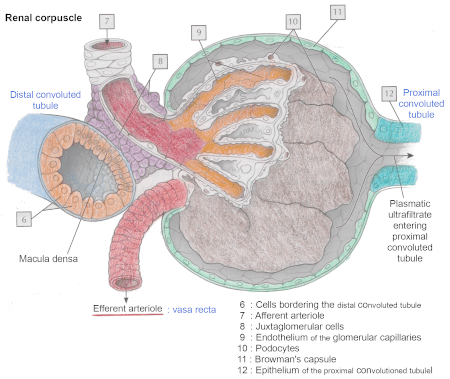
The urinary system uses specific actions, to perform the various functions necessary to accomplish a common goal:

Localisation defines function

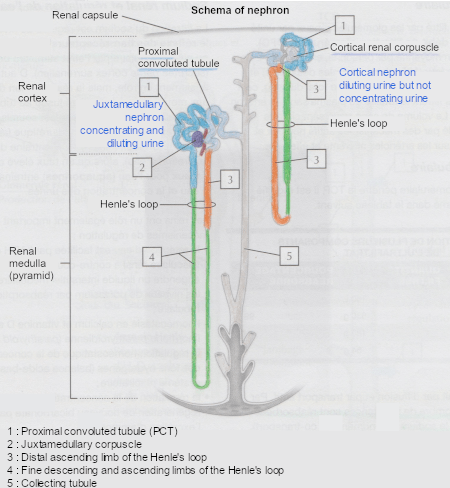
The nephrons are a little different in their structure depending on their location.

  • Cortical nephrons have their glomeruli in the most peripheral or middle region of the renal cortex and generally have only a short Henle’s loop;
  • The juxtamedullary nephrons which have a long Henle’s loop which sinks deep into the innermost renal medulla;
  • Juxtamedullary nephrons make up only 10 to 15% of all kidney nephrons and play an essential role in the concentration of urine.

A nephron is a functional unit of the kidney, which produces an ultrafiltrate from the blood and potentially makes up the urine.

A sequence of tasks

Each nephron has the same successive structures.

  • The glomerulus: a ball formed by the afferent arterioles, which is enclosed in the Bowman’s capsule and which is involved in the filtration of plasma;
  • The proximal convoluted tubule: following, it receives the plasma ultrafiltrate and brings it to the Henle’s loop;
  • Henle’s loop: it consists of a single long tubule, the caliber of which varies and which is covered with epithelial cells specialized in reabsorption and secretion over the entire length;
  • The distal convoluted tube: it receives the residual liquid from Henle’s loop, controls its osmolarity and transports it to the collecting tube or tubule;
  • The collecting tubule: it carries out the terminal part of the nephron where the final concentration of urine is precisely adjusted before it reaches the minor calyxes.

Each element of the nephron has a specific task which belongs to one of the following functions: transport, control, regulate.

Maintain the essentials

The volume of blood passing through each glomerulus is controlled by active nervous and hormonal mechanisms acting on the afferent and efferent arterioles.

Take the example of renal sodium and water regulation:

  • Sodium filtration is regulated at the glomerulus by the baroreceptor reflex,
  • its reabsorption is regulated at the tubular level by the stimulating effect of aldosterone (secreted by the adrenal cortex) and other factors also play a role.
  • The reabsorption of water remains linked to the movements of sodium up to the collecting tubule,
  • then, this regulation of water is subject to the control of vasopressin, the diuretic hormone (ADH for antidiuretic hormone);
  • A low level of DHA leads to diluted urine (excretion of water),
  • while a high level of DHA activates the channels for water (aquaporins) resulting in reabsorption of water and concentration of urine.
  • The counter-current vascular system (the efferent arterioles of the renal vasa recta) maintains the osmotic gradient necessary for tubular function;
  • If water retention is necessary, it will generate a hyperosmotic medullary interstitial fluid, the water reabsorption effect of which will be added to that of DHA.

It is thanks to a coordinated structure, both linear and spatial, that the urinary system is able to regulate the concentration of urine according to the needs of the organism.

Let’s use the specialization of tasks and the coordination of functions to work together for a harmonious world:

If the human body is able to know when to concentrate or dilute
a molecule to maintain the harmony of the body
through hormones or osmotic gradients;

We can define indicators to no longer exceed the limits
that our earthly life imposes on us;

Let’s find out about our limiting factors,
in order to respect them to develop us in the correctness of balance.


Bibliographic reference:
– The information on the urinary system and the pictures are taken from the book « The Netter’s Anatomy Coloring Book », John T. HANSE, Elsevier Masson SAS, 2017 (the french version)..

The immune response, self-awareness

Delimitation cycle

Cette page est également disponible en français.

everything is possible when we are children, since everything is new, discovery, magic. We fully live the present moment, without seeking to achieve a particular goal, under the caring eye of the parents. As adults, we have learned that each act has consequences, with advantages and disadvantages, and out of fear, we often limit our choices. If to live humanely, it was the attention paid to his adult choices, with the aim of living fully the present moment as a child.

Live simply
so that others may simply live.
Mahatma GANDHI

The immune response combines three characteristics to react to the outside world:

Protect yourself from visible physical obstacles

The body’s first line of defense is made up of non-specific barriers.

  • The skin and mucous membranes that cover the outside of the body, or the respiratory, gastrointestinal, urinary and reproductive systems, which produce additional barriers: mucous secretions, enzymes and their acidity;
  • Hunting mechanisms such as tears and urination;
  • Thick, sticky mucus to sequester pathogens;
  • Strong cough or sneezes.

These elements are intended to preserve the interior of the healthy body.

Symptoms to show the invisible

The second line of defense is innate.

It intervenes if the non-specific barriers are exceeded.

It involves:

  • Many cells;
  • Antimicrobial products;
  • Mechanisms of inflammation.

It shows symptoms:

  • Redness;
  • Fever;
  • Sweats;
  • Pain.

These elements call for the person to rest, or protect the injured part of his body, to give the body time to regenerate, thanks to the innate immune response.

A specific, systemic, memory response

The third line of defense is characterized by the specific recognition of a specific pathogen, and a rapid response against iterative invasion of the pathogen.

Take the example of B cell activation:

  • The B lymphocyte recognizes the pathogen by an antibody attached to its surface. This antibody is specific for the antigen and the B lymphocyte becomes sensitized;
  • The B lymphocyte is then activated when an inactive T helper lymphocyte recognizes the same antigen. linked to the B lymphocyte, and secretes lymphokines which lead to the division of the sensitized B lymphocyte;
  • The division of this B lymphocyte generates millions of B cells, which transform into plasma cells which then secrete antibodies specific for the antigen, in the blood and the lymph;
  • These circulating antibodies bind to this specific antigen of the pathogen and make it accessible to its destruction by phagocytes. Antibodies can also bind directly to bacterial toxins or to receptors used by bacteria and viruses so as to neutralize the invader;
  • The division of B cells also leads to the memorization of aggression and of the response in the event of re-exposure of the organism to the same foreign antigen, thanks to memory T lymphocytes.

It is thanks to a structured coordination of B, T lymphocytes and the intervention of other different elements such as macrophages, that the body can neutralize pathogens and regain its health.

Let’s use protection, attention, dialogue, to learn to gain self-confidence for your choices:

If the human body is able to distinguish a pathogen
from a normal body cell,
thanks to the molecules present on their surface;

We can learn to dialogue with our body, and know
when it is in good health,
when it is in the presence of danger,
when it needs nurse oneself;

Let’s try to get to know each other,
in order to recognize ourselves among others,
we discovered the freedom to live together.


Bibliographic reference:
– The information on the immune response is taken from the book « The Netter’s Anatomy Coloring Book », John T. HANSE, Elsevier Masson SAS, 2017 (the french version).

Human anatomy, a harmonious interaction

Delimitation cycle

Cette page est également disponible en français.

The world in which we live where reigns inequalities, violence, misery is not the result of our Humanity but the result of choices -individuals and collectives, present and past- made to evolve, to discover Life through experiment, through the lived. Seeing injustices as a lack of balance in oneself, like the falls while learning to walk, offers a new perspective for action.

You have never heard a program speaks about love.
But it is a human emotion.
No, it is a word. What is important it is the interaction that this word implicates.
« Matrix Revolutions » by Lilly WACHOWSKI, Lana WACHOWSKI

The human body combines three characteristics for successful common actions:

A set of differentiated elements

The skeleton, with around 214 bones, is the backbone of the human body, but it cannot move it..

The muscles, thanks to their capacity of contraction and relaxation, allow movement.

In order for the action of the muscles to be combined with the action of the skeleton, it is necessary to consolidate the skeleton, so that it becomes a continuous element, and connect it to the muscles.

This requires the intervention of three different constituents:

  • The ligaments connect the bones together;
  • Tendons connect bones to muscles;
  • The fascia connects the muscles to their attachment point.

All these elements have distinct characteristics, which give them particular properties, to fulfill different tasks.

A diversified coordination

All bones are of the same nature, but their morphology and position within the skeleton will make them unique, and allow them to perform a specific function.

Take the example of tracking body weight at the skeleton level:
The spine constitutes the vertical axis of the body, it transmits the information of the body weight, from the head to the feet.

  • The first vertebra -Atlas- holds the head and the neck. Cervical curvature appears when the child can support the weight of his head;
  • The bodies of vertebrae support the weight of the body, that is why they increase in size and size as one descends along the spine ;
  • It is in the lumbar region (5 vertebrae) that the vertebrae are the largest and most resistant to support the weight of the trunk. The lumbar curvature appears when the child acquires an erect standing position;
  • The wedge-shaped sacrum transmits the weight of the body to the pelvis;
  • In the lower limbs, the femur, the longest bone, transmits the body weight from the pelvis to the knee;
  • The tibia, large bone, carries the weight of the body;
  • The talus transfers the weight of the body from the tibia to the foot;
  • The metatarsophalangeal joints participate in the body weight bearing surface.

Each element of the human body has a predefined place and shape
to transfer information along the body.

Diversity is individuality

Just like the bones have a precise position within the human skeleton, to obtain a specific action of the human body; each diversified element has its own place and attachment points.

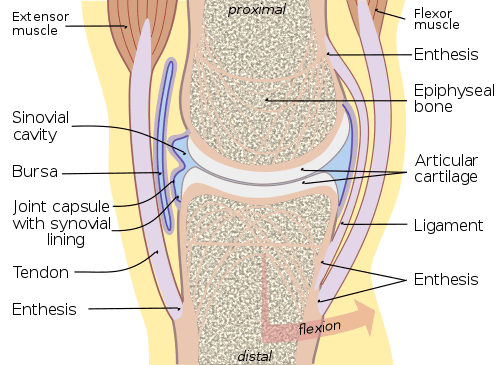
Take the example of a synovial joint:
It coordinates the movements between two bones.

  • The morphology of the ends of the bones will determine the type of movement allowed. The shapes of the ends of the bones involved in the joint will be correlated ;
  • The two bones are united by an articular cavity filled with synovial fluid, surrounded by a capsule, with articular cartilage covering each opposite bone surface;
  • The ligaments, tendons, aponeuroses, will solidify the joint, limit movements, and allow more or less rapid reactivity of the muscles;
  • The synovial or fat bursa, will protect the joint by reducing internal friction or external shock;

It is through structured and thoughtful coordination that the joint action of the separate elements is harmonized, for a specific result.

Let’s use the specificity of the human family, having a diversity of individualities, made to interact in harmony with the world:

If the human body functions harmoniously, thanks to an interior backbone unique by its nature and a particular structural organization, of each of the morphologically different bones which compose it;

We can look at humanity as a set of human beings who share a common inner nature and a specificity of being;

Let’s seek to know this interior backbone common to all and our individual differences, we will animate them for common happiness.


Bibliographic references:
– The picture of the synovial joint is taken from Wikipedia: https://fr.wikipedia.org/wiki/Articulation_(anatomie)#/media/Fichier:Joint.svg.
– The information on the anatomy and the picture of skeleton is taken from the book « The Netter’s Anatomy Coloring Book », John T. HANSE, Elsevier Masson SAS, 2017 (the french version).