By studying Einstein’s brain, Marian Diamond (1926-2017) saw that its size and number of neurons were normal, but it had an astonishing concentration of glial cells.
This allowed him to discover neuroplasticity
♫♫♫
Brain plasticity induced by training allows for functional recovery.
♫♫♫
Our senses have demonstrated their therapeutic power through aromatherapy, musicology, art therapy,…
I wish to use Braille to activate brain plasticity and enable individuals to regain a function lost or not fully developed during pregnancy.
To achieve this, I’m developing two approaches to Braille:
Braille touch. This is traditional Braille. It allows you to read and write books and texts. It’s language-specific. You need to know the language to use this method.
Musical braille touch. It is universal, like music. Regardless of the language, it’s the same. But musical braille is a very complex and difficult system. I’ve simplified it and limited it to melodies. You need a piano, regardless of its size, to use this method.
♫♫♫
The braille touch protocol, to activate brain plasticity, within the context of existing care.
Before a treatment session, conduct a 20- to 45-minute braille session:
Time for discussion and listening with the person to understand what they hope to gain from the upcoming treatment session,
Shiatsu-Magnetism to connect the quantum body,
A 20- to 30-minute braille session, depending on the Braille level:
Braille touch:
Introduction to the tactile system of braille and the letters,
Reading words aloud,
Reading short stories aloud in both print and braille,
Reading short stories aloud in braille alone,
Musical braille touch:
Introduction to the tactile system of braille and musical notes,
Learning notes on the piano,
Playing children’s songs,
Playing short melodies,
Playing melodies with vocals,
Playing learned melodies to improve memory,
Exploring free musical interpretation.
Therapeutic session
Depending on the case, a braille session may be conducted after the therapeutic session, to validate the protocol or to complete a book or a melody. The aim is to promote well-being so that learning is optimal.
♫♫♫
Examples of possible contexts.
For pathologies that directly affect the brain, such as cerebral palsy, braille touch could sufficiently activate brain plasticity to compensate or reduce the effects of brain lesions.
For genetic diseases, rare diseases, during gene therapy or other therapies, braille touch could sufficiently activate associative areas to facilitate and anchor the expression of the new gene.
In rehabilitation centers, it would be interesting to see if braille touch can help people regain their motor skills more easily.
To facilitate learning, braille touch could be used to help hyperactive children focus their attention.
Référence bibliographique : – Les information sur Marian Diamons et la plasticité cérébrale sont issues du livre « Anatomie clinique Tome 5 Neuroabatomie » 2ème édition, Kamina, Aditions Maloine.
En étudiant le cerveau d’Einstein, Marian Diamond (1926-2017) a vu que sa taille et le nombre de neurones étaient normaux, par contre il avait une concentration étonnante en cellules gliales.
Cela lui a permis de découvrir la neuroplasticité
♫♫♫
La plasticité cérébrale induite par un entrainement permet la récupération fonctionnelle.
♫♫♫
Nos sens ont montré leur pouvoir thérapeutique via l’olfactologie, la musicologie, l’art thérapie,….
Je souhaite utiliser le Braille pour activer la plasticité cérébrale et permettre à une personne de retrouver une fonctionnalité perdue ou non développée pendant la grossesse.
Pour se faire, je développe 2 approches du Braille :
Le toucher braille. C’est le braille classique. Il permet de lire et d’écrire des livres, des textes. Il est spécifique de la langue. Il faut connaitre la langue pour utiliser cette voie.
Le toucher braille musical. C’est universel comme la musique. Quelque soit sa langue, il est le même. Mais le braille musical est un système très complexe, difficile. Je l’ai simplifié et limité aux mélodies. Il faut un piano, quelque soit sa taille, pour utiliser cette voie.
♫♫♫
Le protocole du toucher braille, pour activer la plasticité cérébrale, dans un contexte de soins existants.
En amont d’une séance de soins, faire une séance de braille de 20 à 45 minutes :
Temps de parole et d’écoute avec la personne pour savoir ce qu’elle veut gagner lors de la séance de soins à venir,
Shiatsu-Magnetism pour connecter le corps quantique,
Séance de braille de 20 à 30 mn, suivant le niveau en braille :
Le toucher braille :
Initiation au système tactile du braille et les lettres,
Lecture à haute voix de mots,
Lecture à haute voix de courtes histoires en double écriture caractères et braille,
Lecture à haute voix de courtes histoires en braille seul.
Le toucher braille musical :
Initiation au système tactile du braille et les notes,
Apprendre les notes sur le piano,
Jouer des chansons enfantines,
Jouer des courtes mélodies,
Jouer des mélodies avec chant,
Jouer les anciennes mélodies pour travailler la mémoire,
Travailler la libre interprétation musicale.
Séance de soins.
Suivant les cas, une séance de braille peut-être réalisée après les soins, pour valider le protocole ou pour finir un livre, une mélodie. Le but recherché est d’apporter un bien-être afin que l’apprentissage soit optimal.
♫♫♫
Exemples de contextes possibles.
Pour les pathologies qui touchent directement le cerveau tel que la paralysie cérébrale, le toucher braille pourrait activer suffisamment la plasticité cérébrale pour pallier ou diminuer les effets des lésions cérébrales.
Pour les maladies génétiques, les maladies rares, lors de la thérapie génique ou les autres thérapies, il se pourrait que le toucher braille active suffisamment les aires associatives afin de faciliter et d’ancrer l’expression du nouveau gène.
Dans les centres de rééducation, il serait intéressant de voir si le toucher braille peut aider les personnes à retrouver plus facilement leur motricité.
Pour faciliter l’apprentissage, le toucher braille pourrait être utilisé pour aider les enfants hyperactifs à canaliser leur attention.
… et d’autres possibilités encore. Il faut tester.
Référence bibliographique : – Les information sur Marian Diamons et la plasticité cérébrale sont issues du livre « Anatomie clinique Tome 5 Neuroabatomie » 2ème édition, Kamina, Aditions Maloine.
Music has the advantage of being understandable in all languages. Whereas to read or transcribe a book into braille, one must know the language.
♫♫♫
But musical braille is a very complex, difficult and very verbose system.
That’s why I chose to transcribe the melodies, note by note with slurs and ties. I don’t specify the piano fingerings, accents, or dynamics, which I write on the braille score. When there are repetitions, codas, or segnos, I transcribe all the notes to be played.
Another advantage of musical braille is that it stimulates memory and brain plasticity. Reading and playing simultaneously is not easy, but the measures are delimited by spaces, and the sensored receptors in the fingers are connected to the brain, facilitating gradual learning that leads to free interpretation. The senses, the brain, and the emotional body are stimulated simultaneously, promoting auto-regeneration.
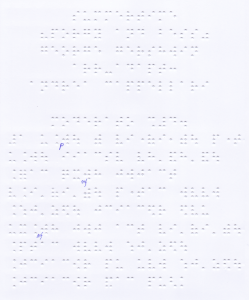
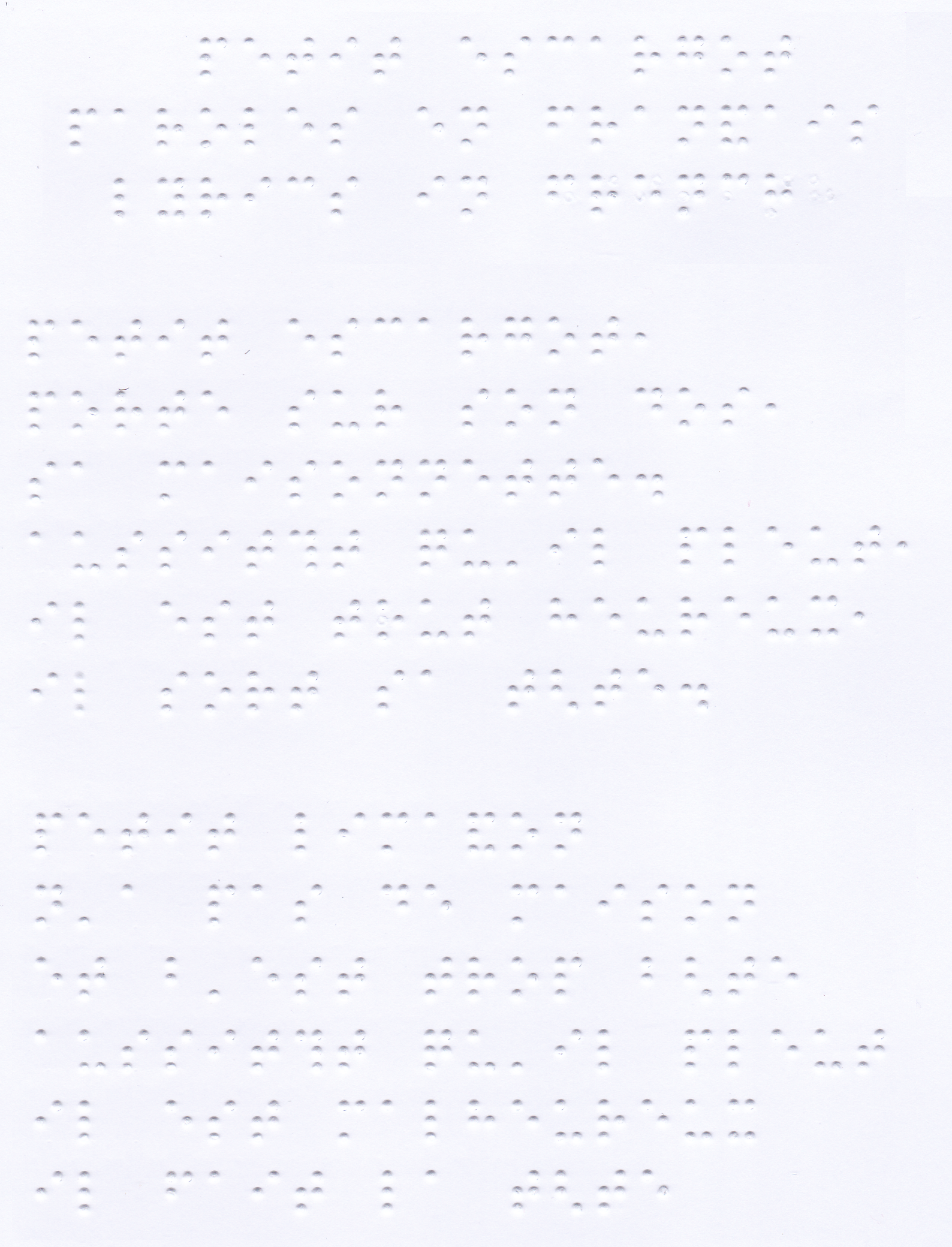
You will find on this page the transcribed melodies.
♫♫♫
Some explanations.
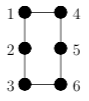
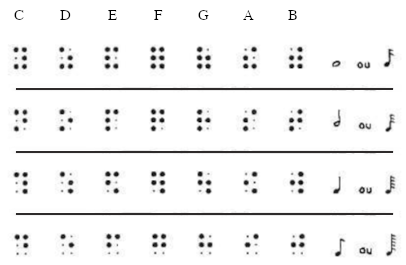
The 4 boxes at the top are used to specify the note, and the 2 boxes at the bottom the duration.
The standard treble and bass clefs are not indicated to avoid complicating the transcriptions. Clefs are indicated when their use is unconventional.
When the first measure is an anacrusis (incomplete), it can be assigned the number 0.
Up to 3 alterations in the key signature are transcribed one by one, then they are counted .
The octave number must precede the note:
On each new line,
Whenever an interval is greater than or equal to a fifth,
Whenever an interval is greater than or equal to a fourth if the octave changes,
After textual information with the symbol (3-4-5) such as repeat signs, dynamics, time signature changes, rhythmic information, metronome indications…
But when the interval is in seconds or thirds, it is not necessary to repeat the octave sign before the note, whether or not one changes octave, going up or down.
For the musical numerotation, english numerals are used.
♫♫♫
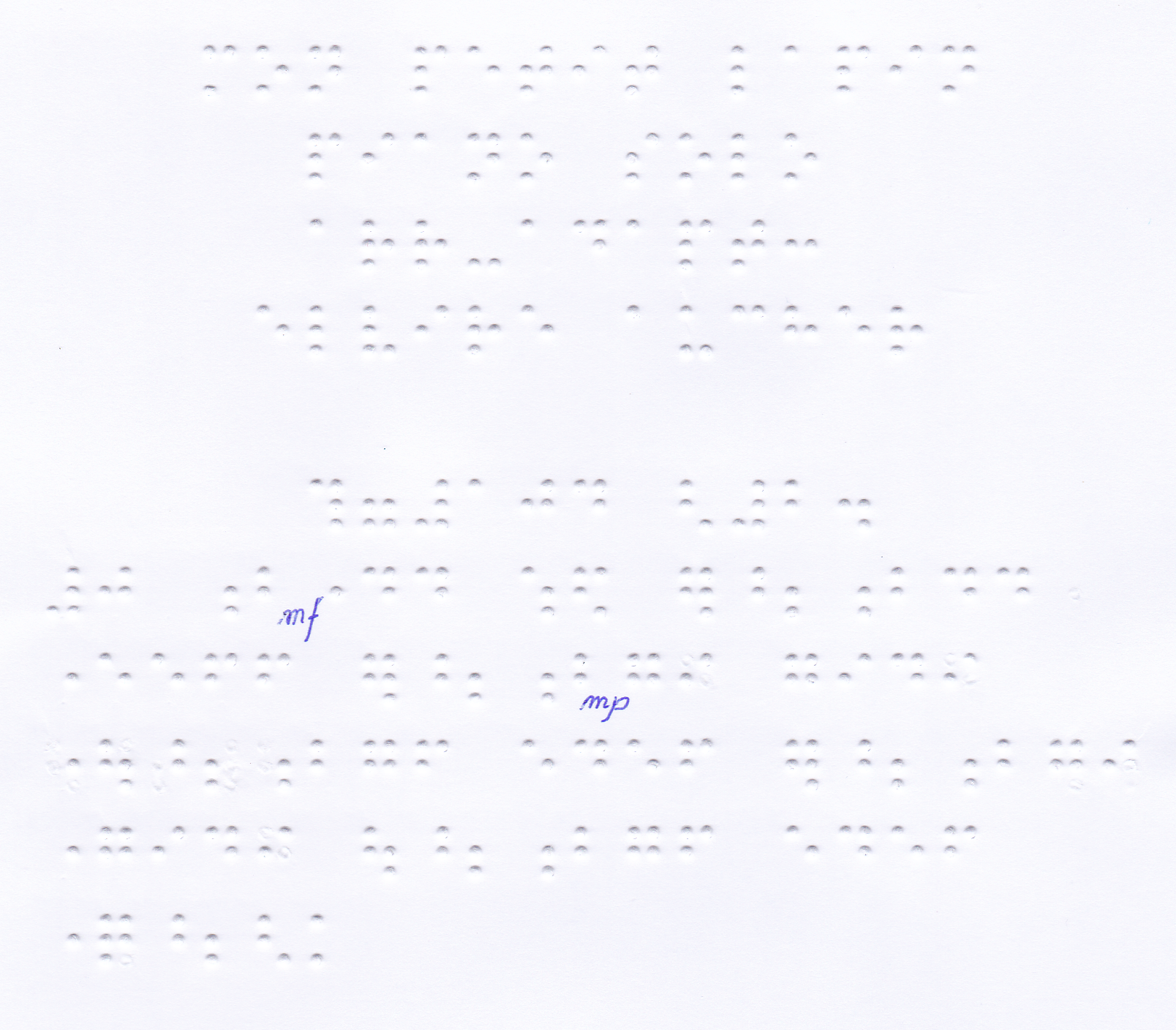
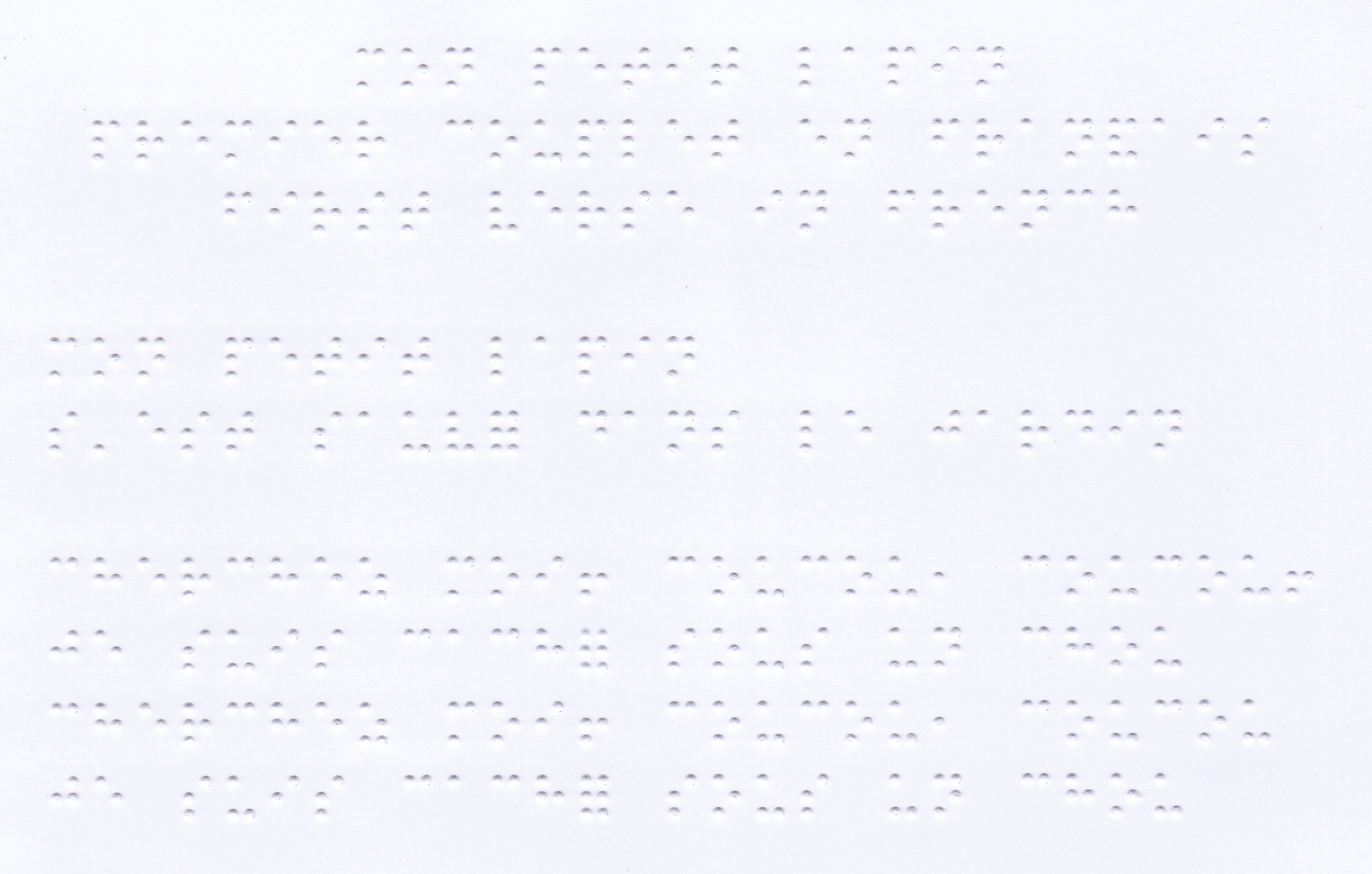
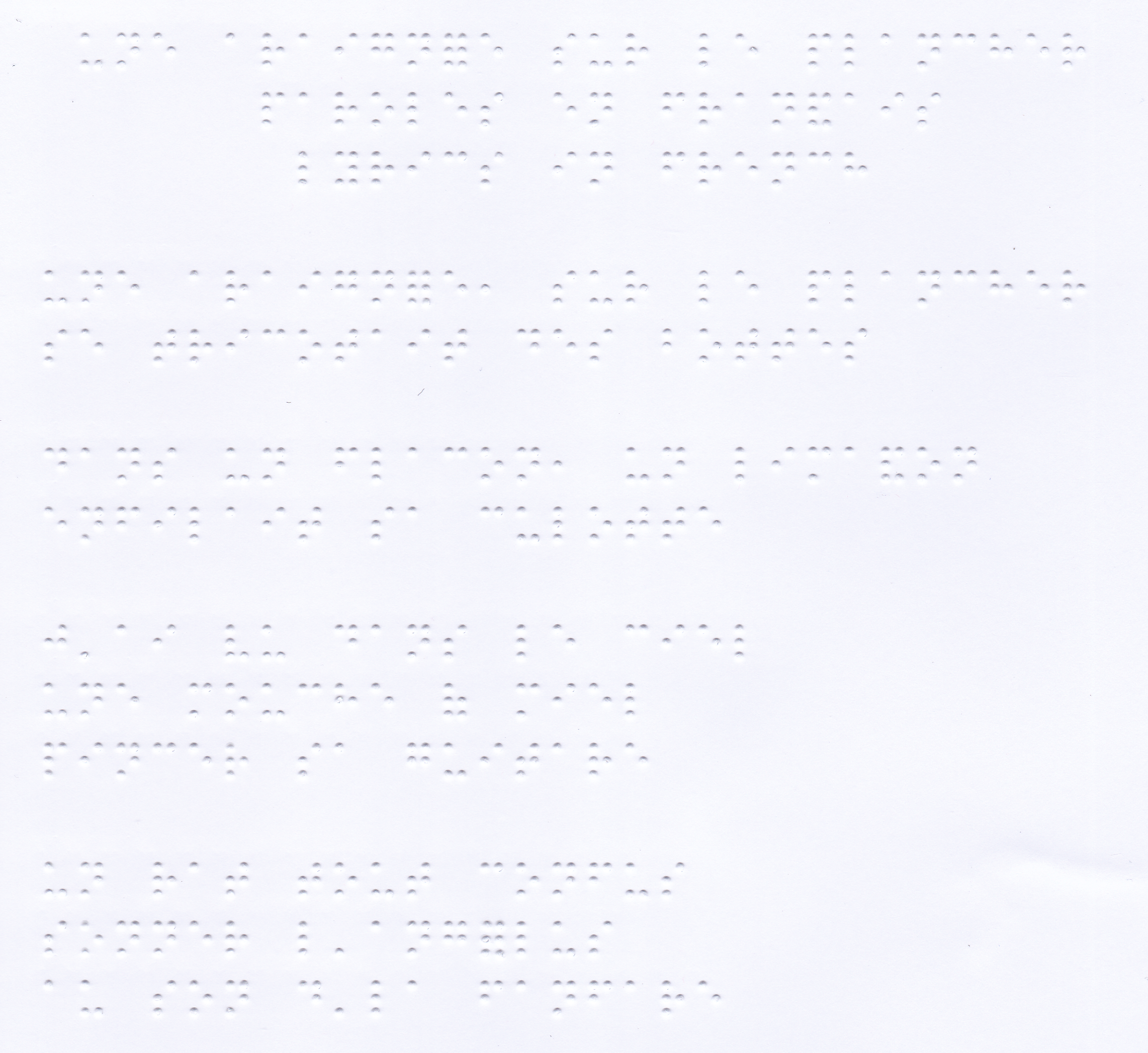
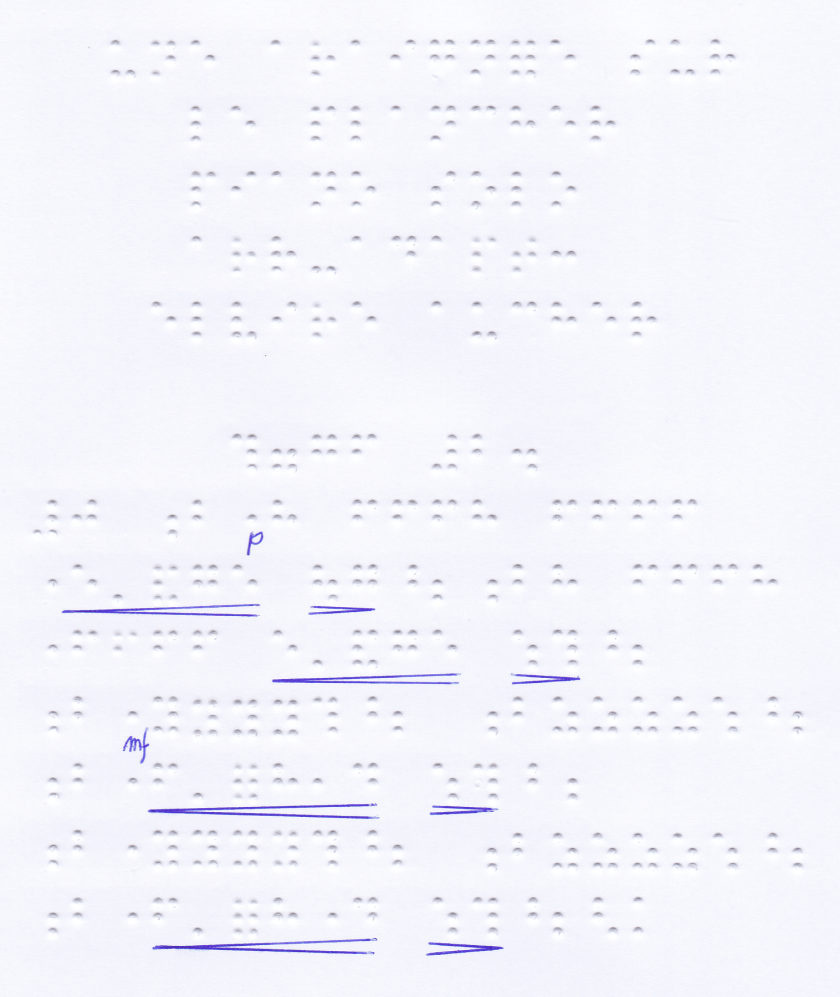
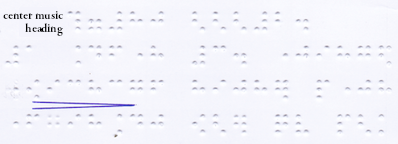
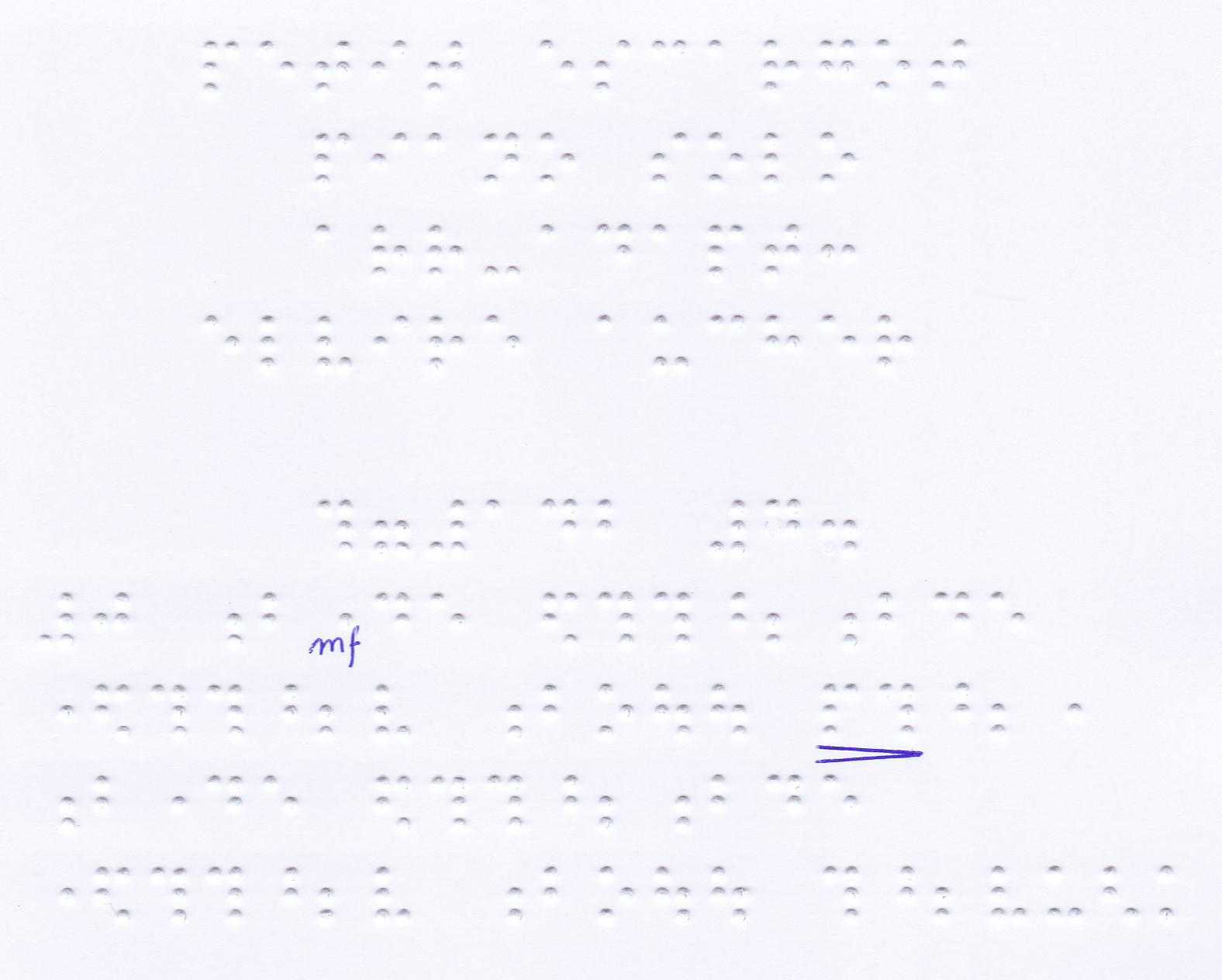
An example of a musical score transcription.
♫♫♫
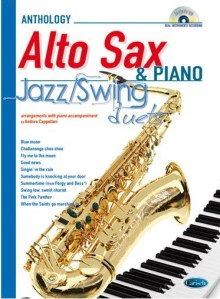
Click on a melody to see the score and an interpretation I did on piano or alto saxophone.







 .
.

 Ki-Regeneration ®