You can visit the Eric carle Website for more information about the author: –https://eric-carle.com/.
For the transcription, I bought an edition published in 2025 by Penguin Random House LLC. You can visit their Website: – https://www.penguin.com/kids.
♫♫♫
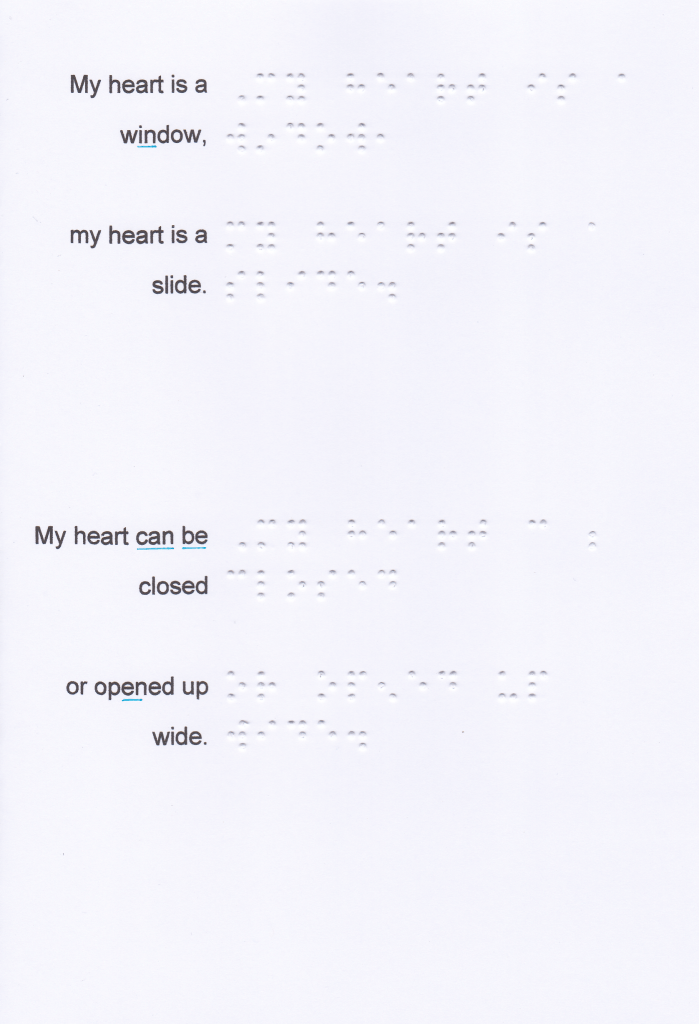
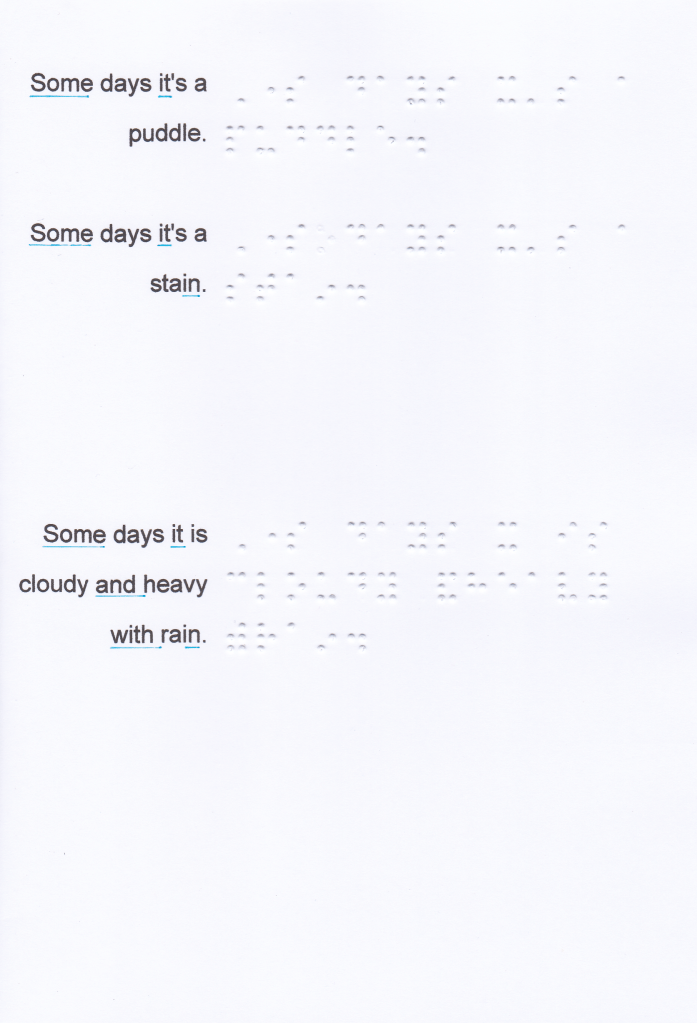
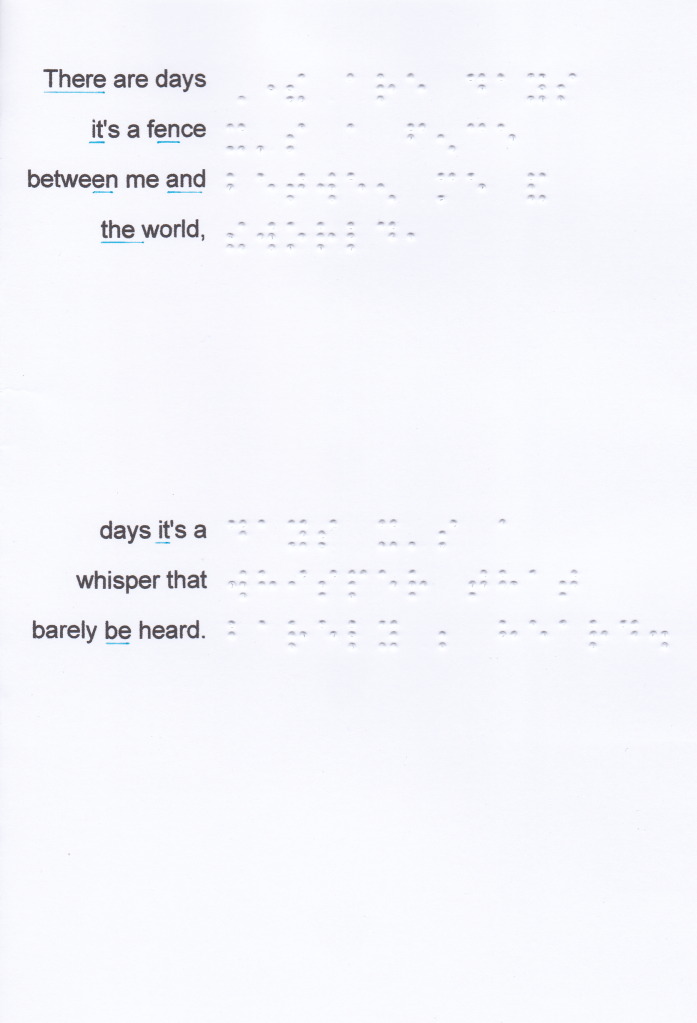
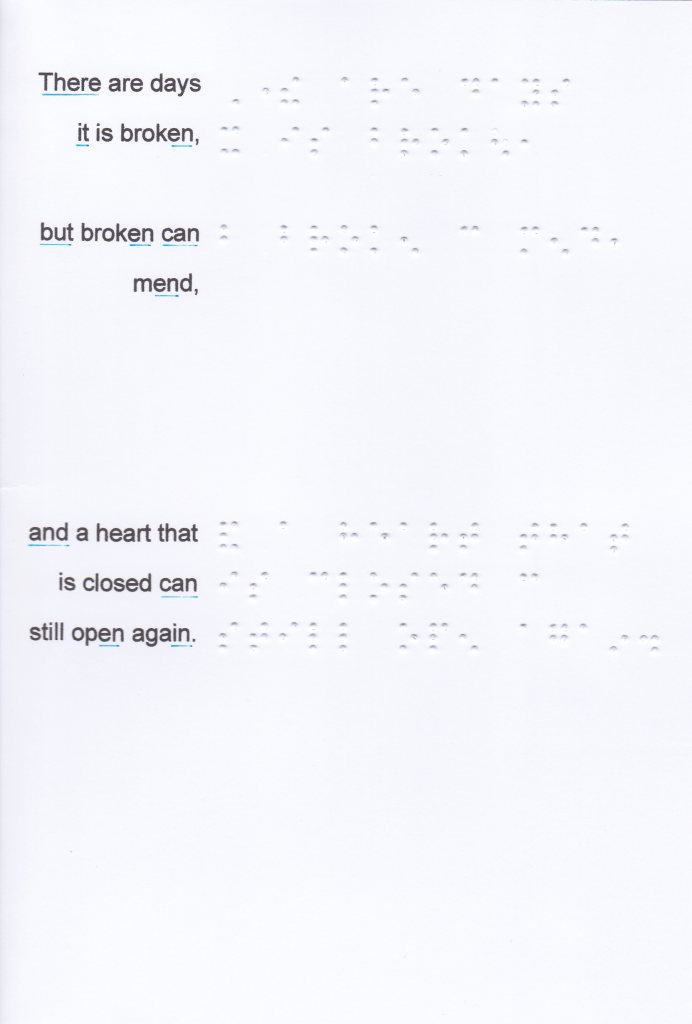
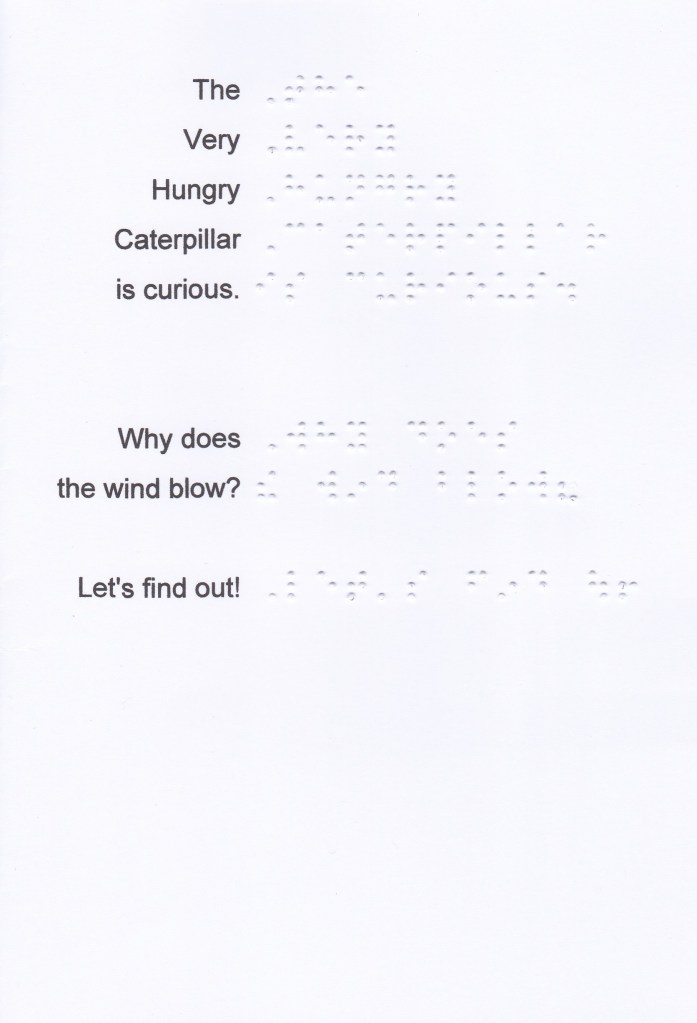
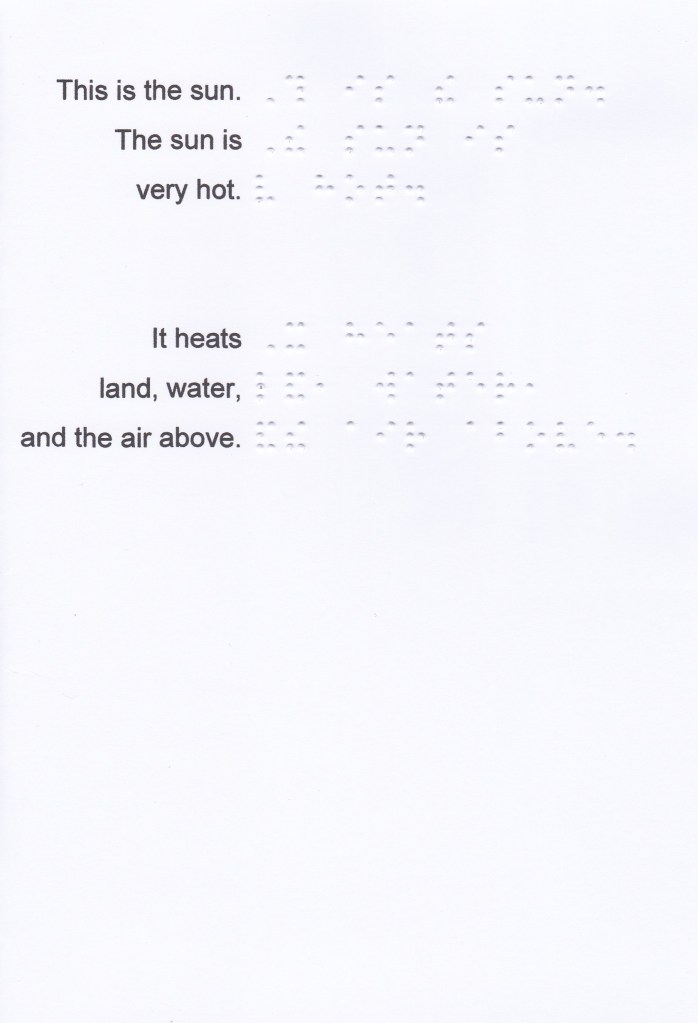
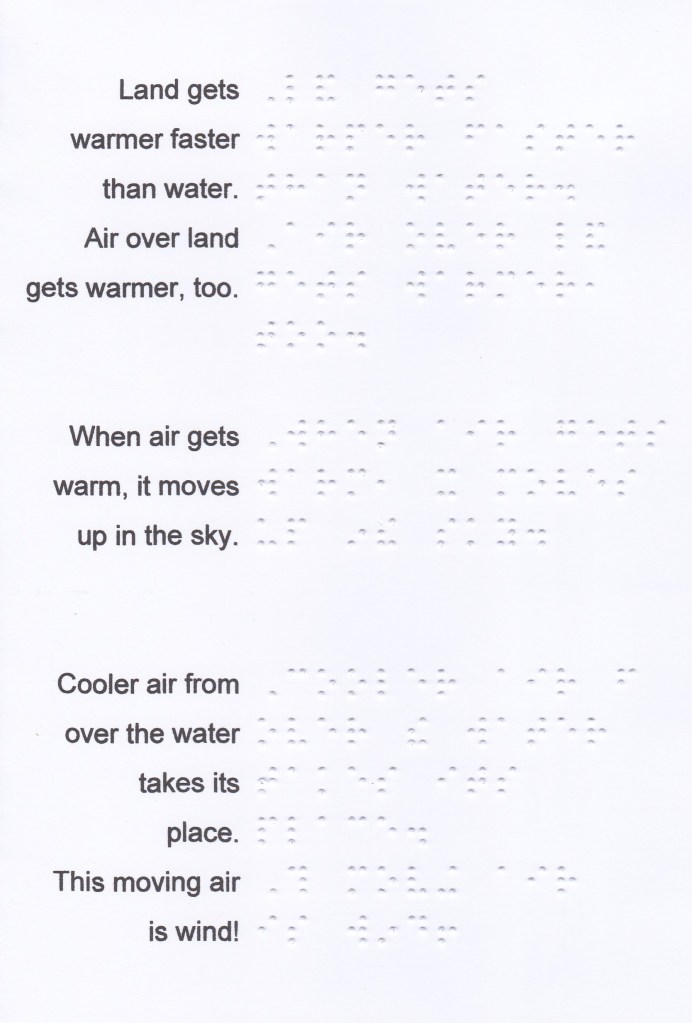
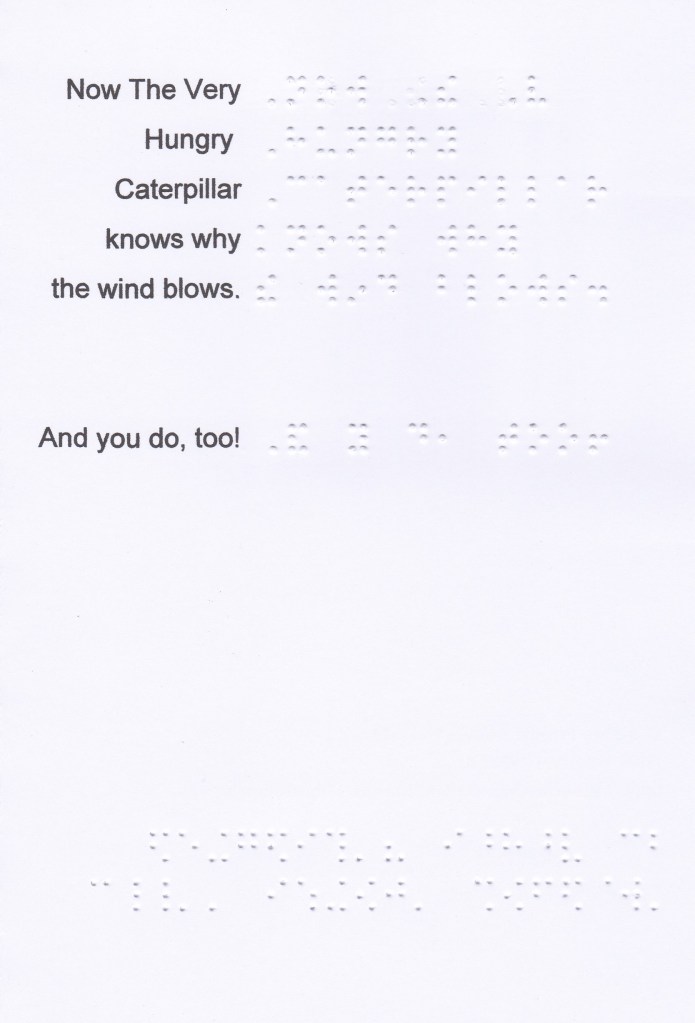
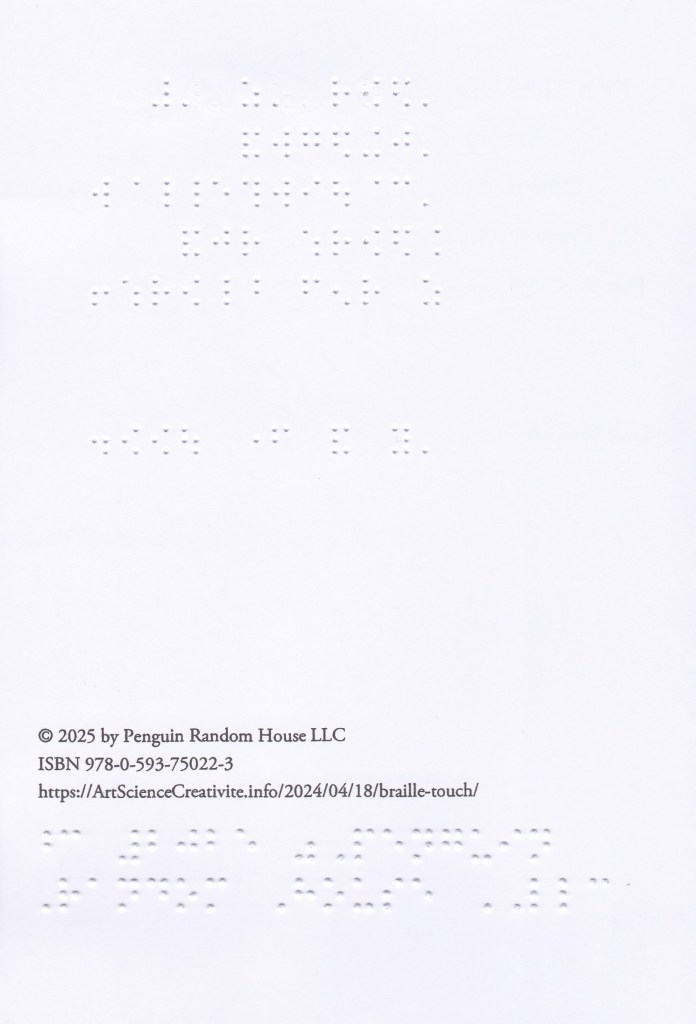
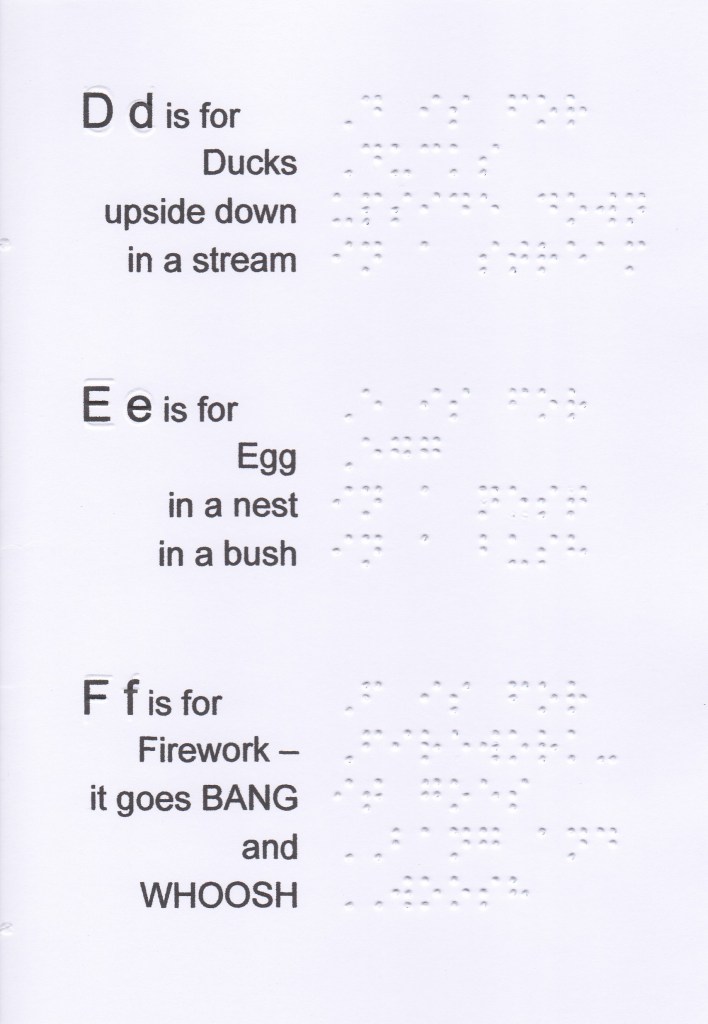
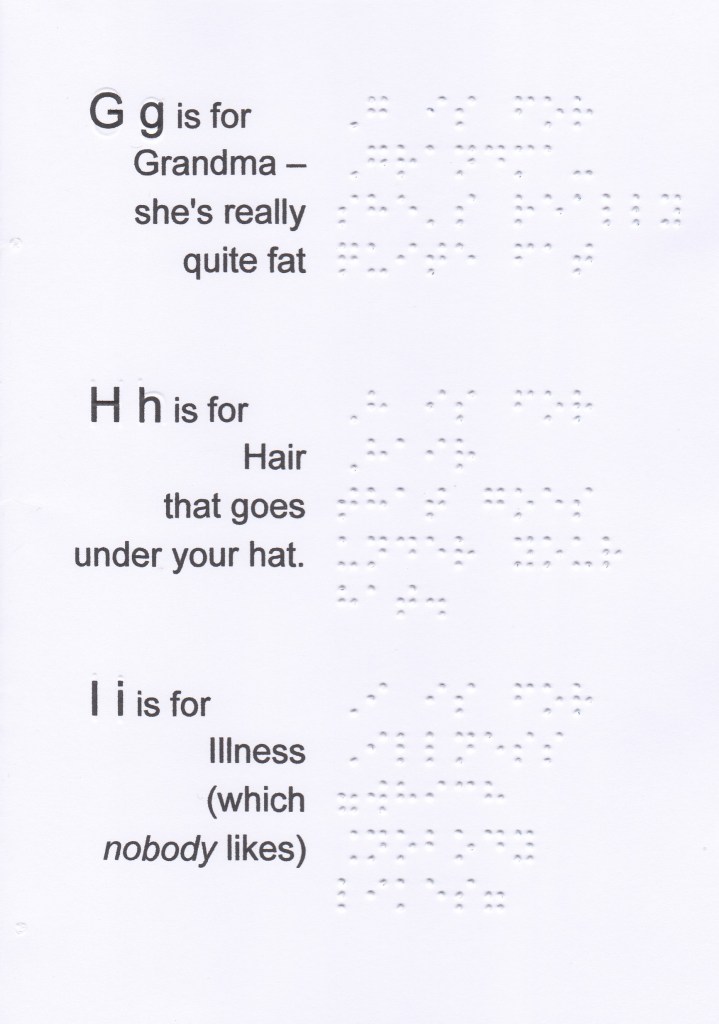
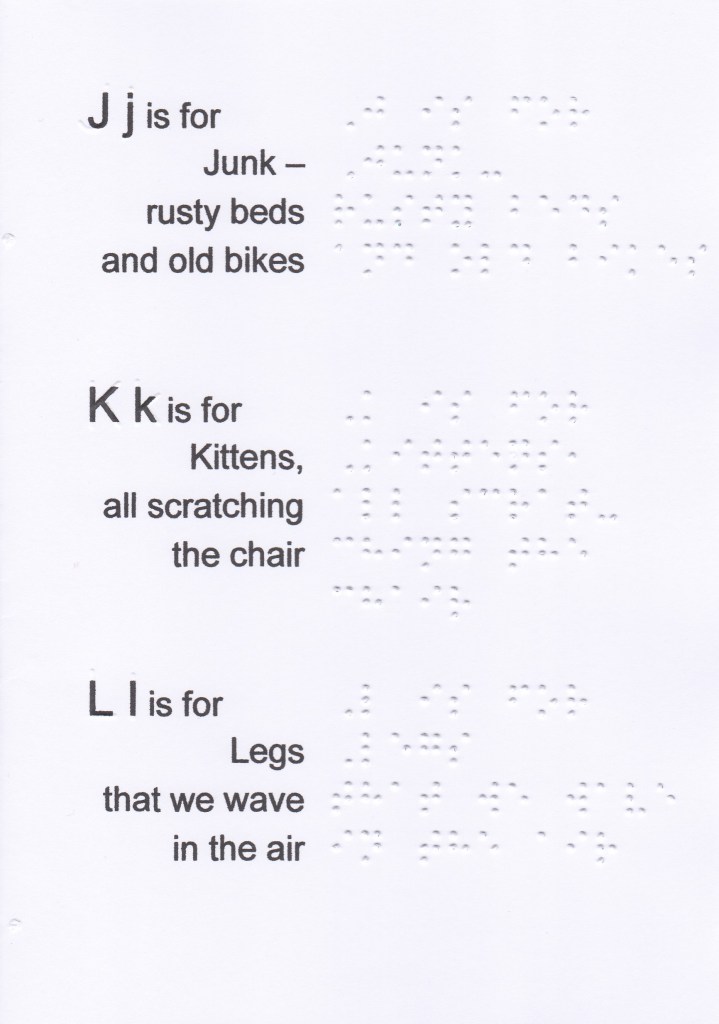
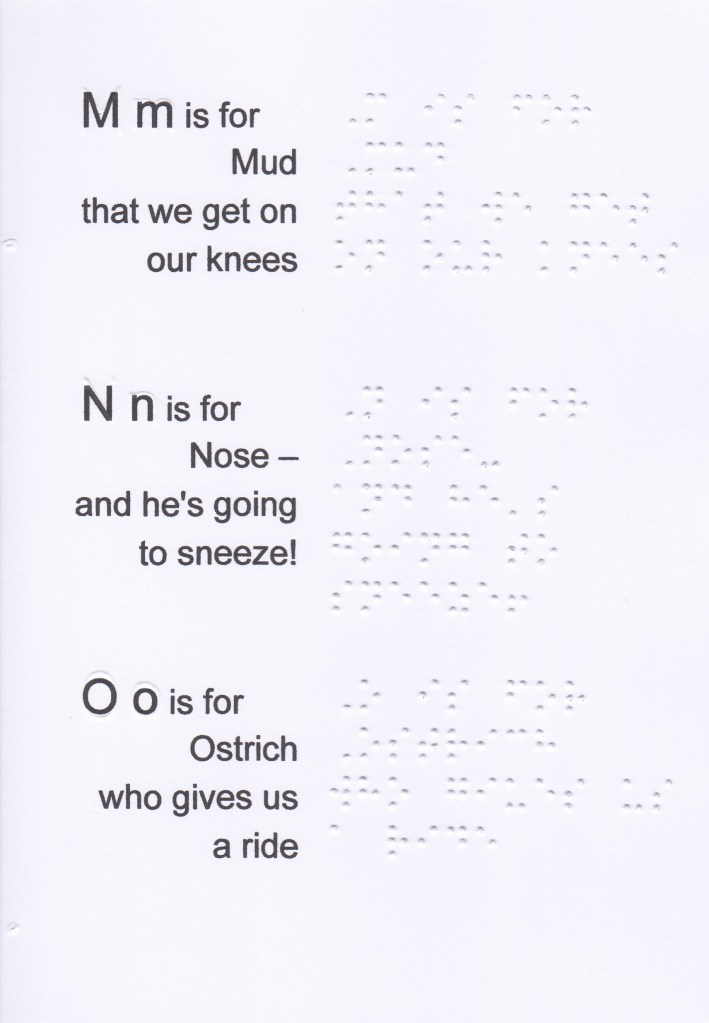
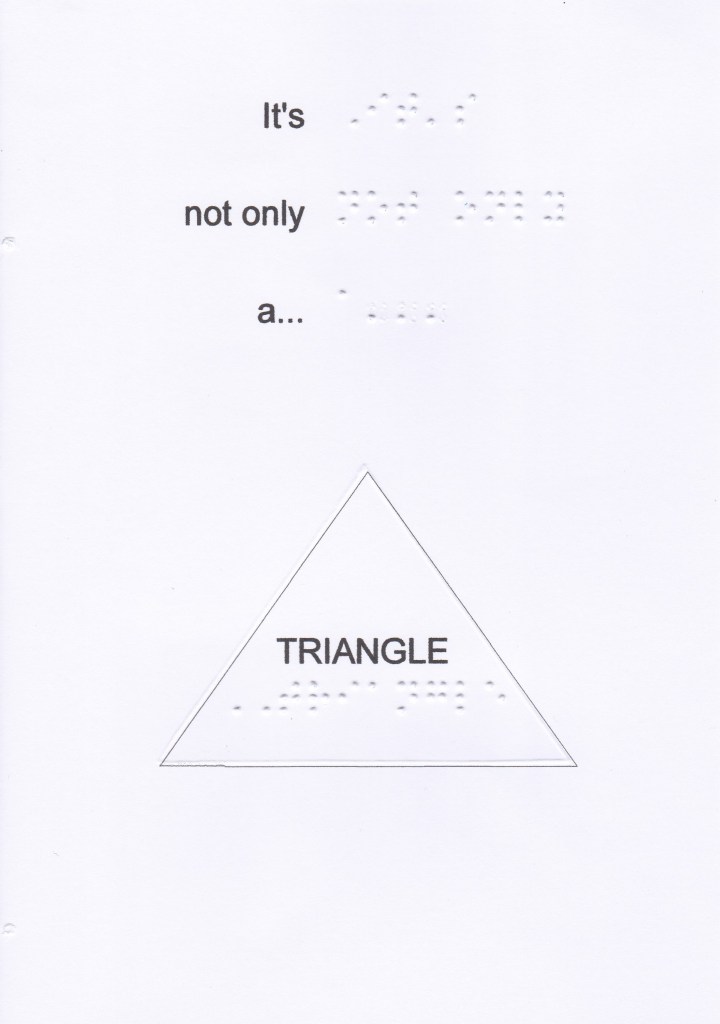
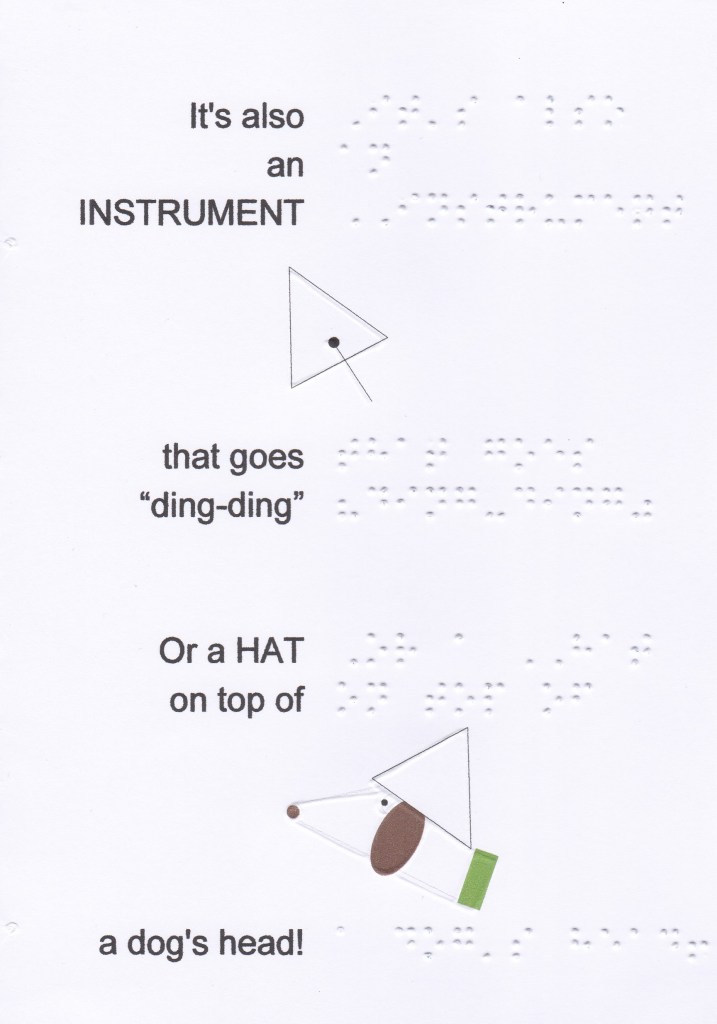
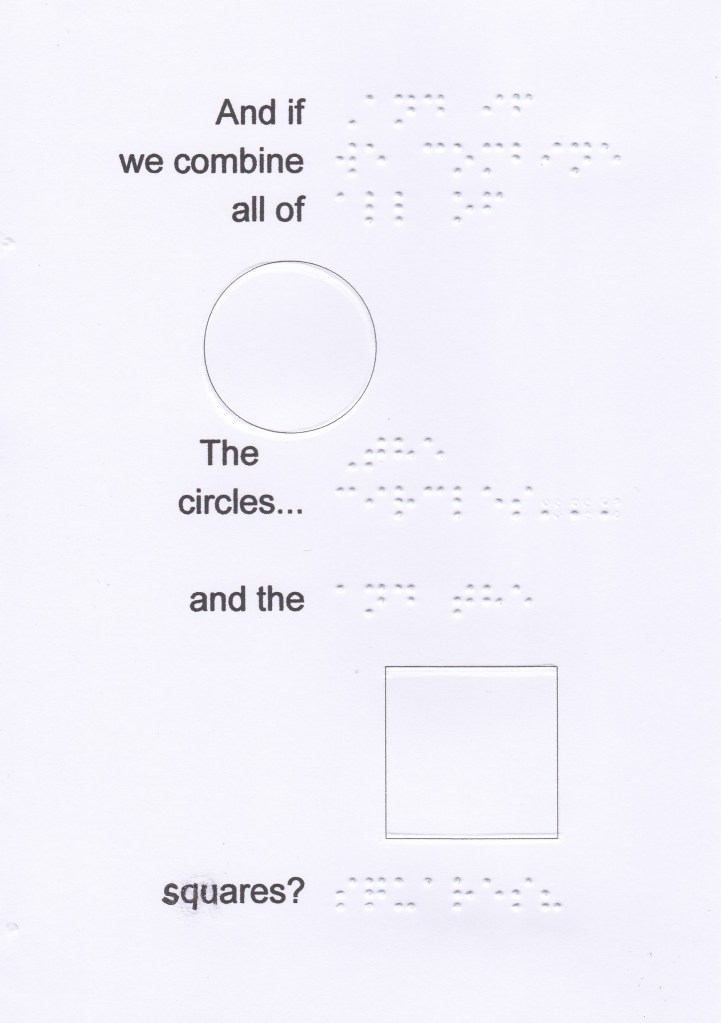
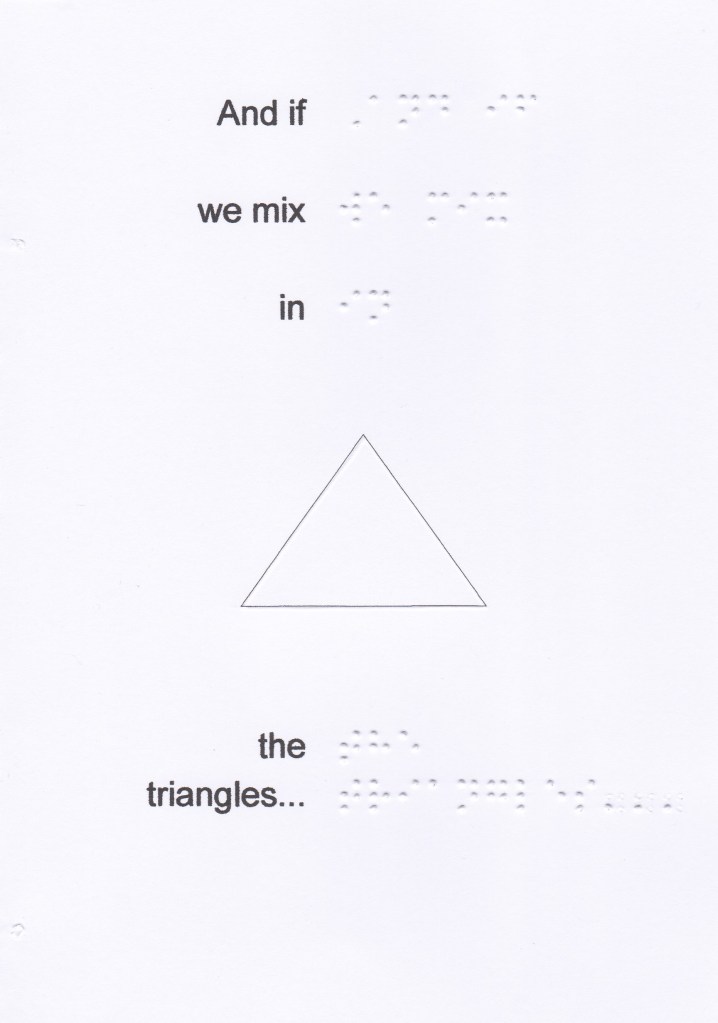
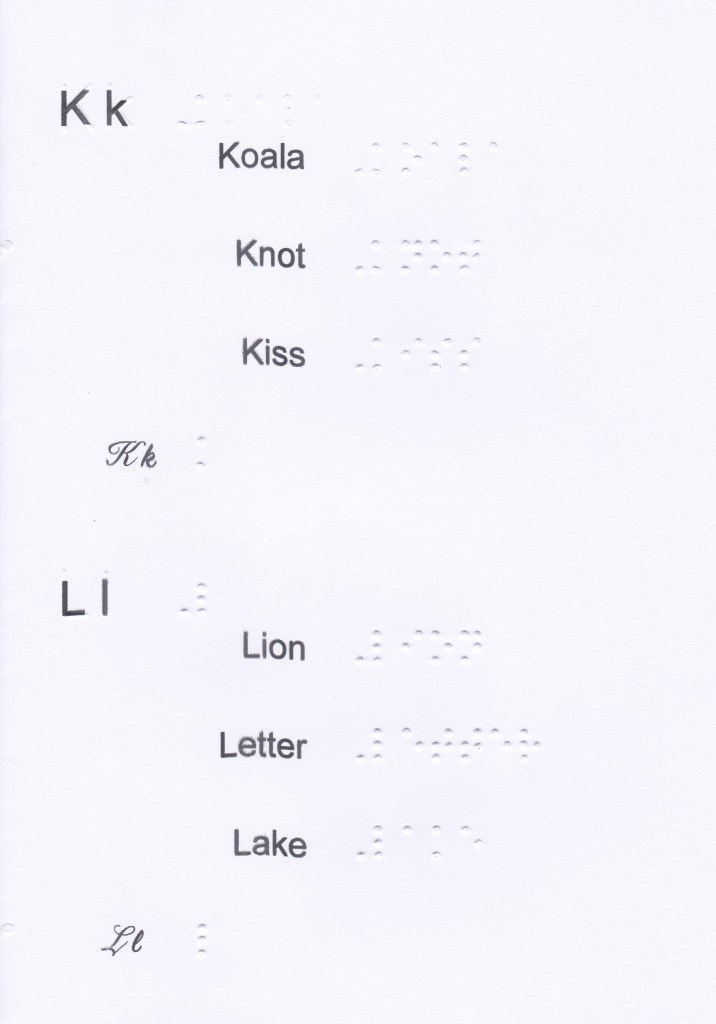
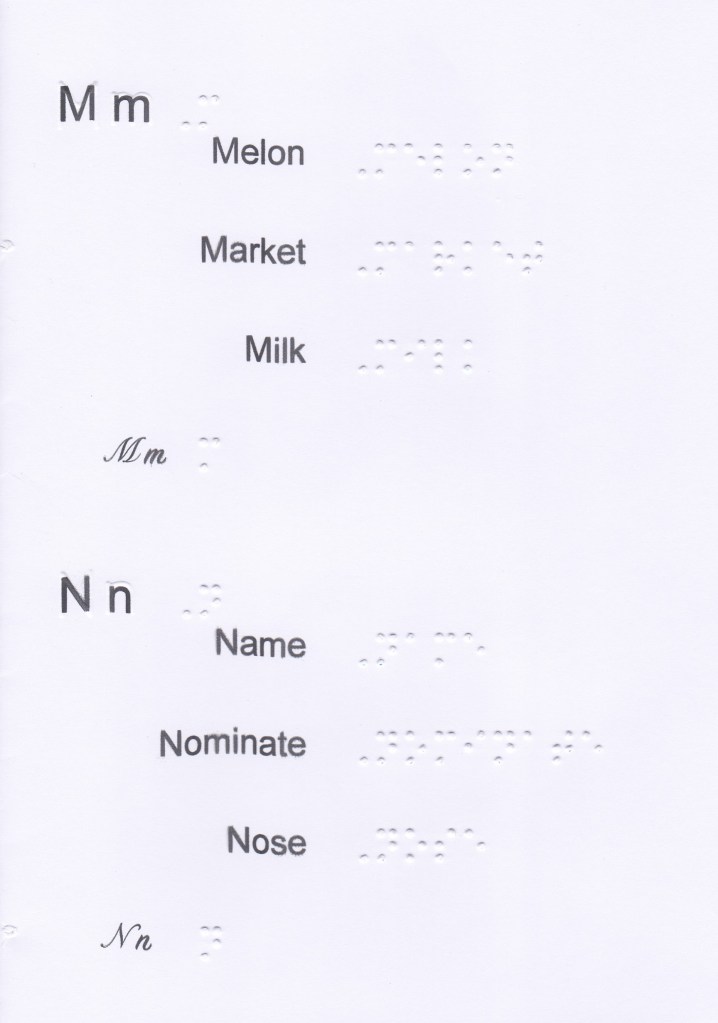
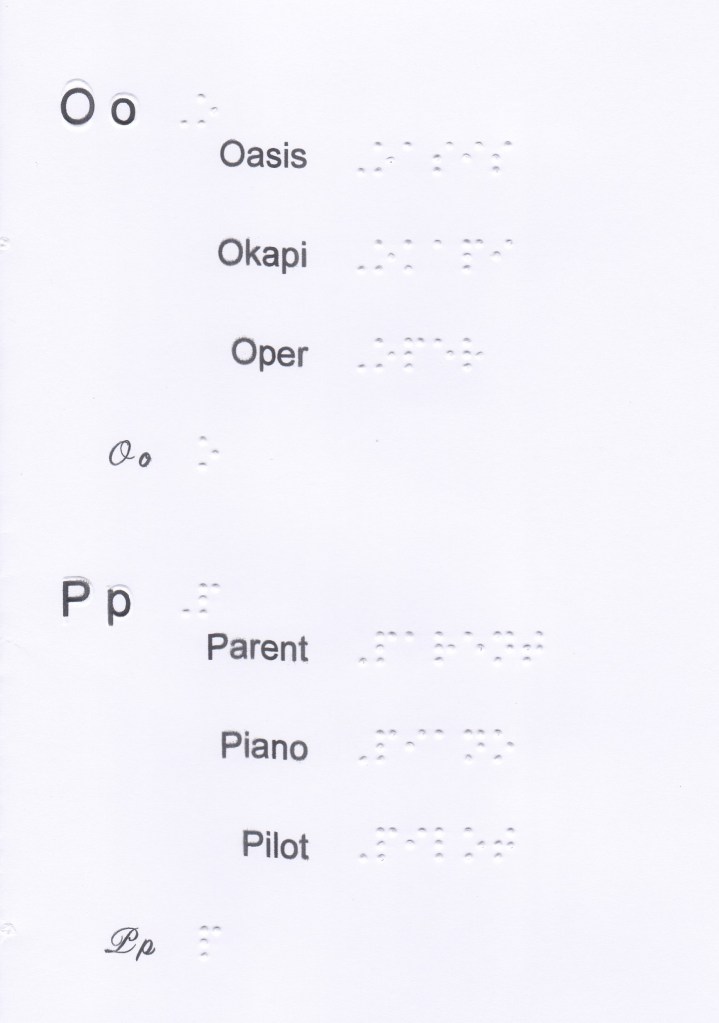
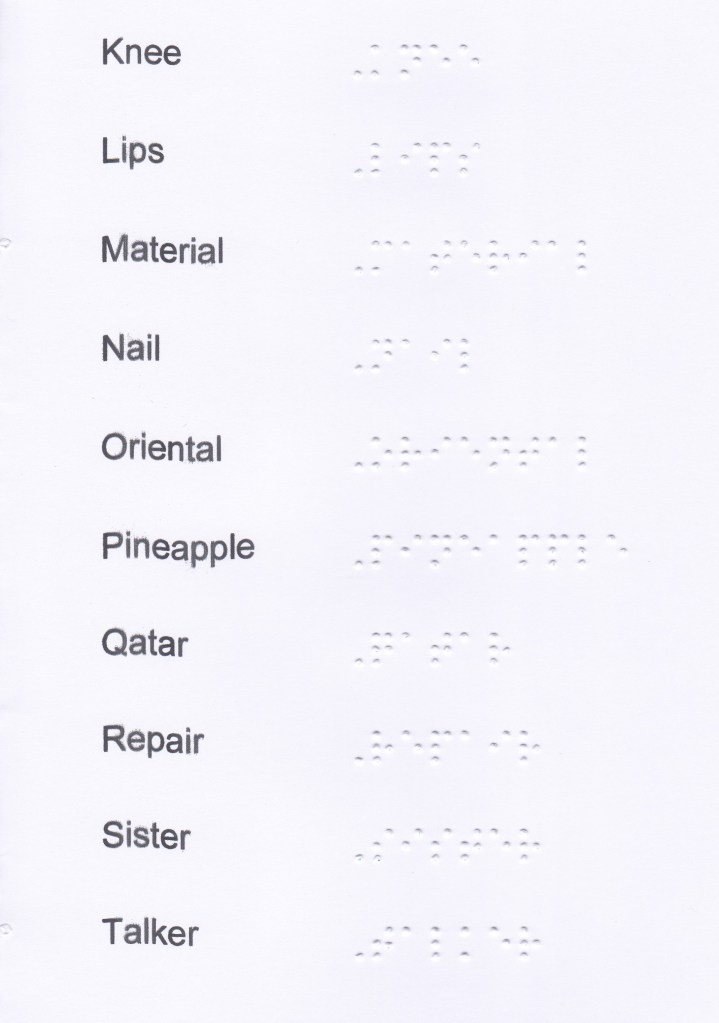
Click on the first image to enlarge it and scroll through the pages like in the book.
If you would like a paper version so that you can practice reading with your fingers, send me a request with your postal address to obel.bourgait@gmail.com. Sending letters in Braille is free, even to foreign countries. I do not have stock, I transcribe the books as requests arise, it takes a minimum of one week (creation and sending).
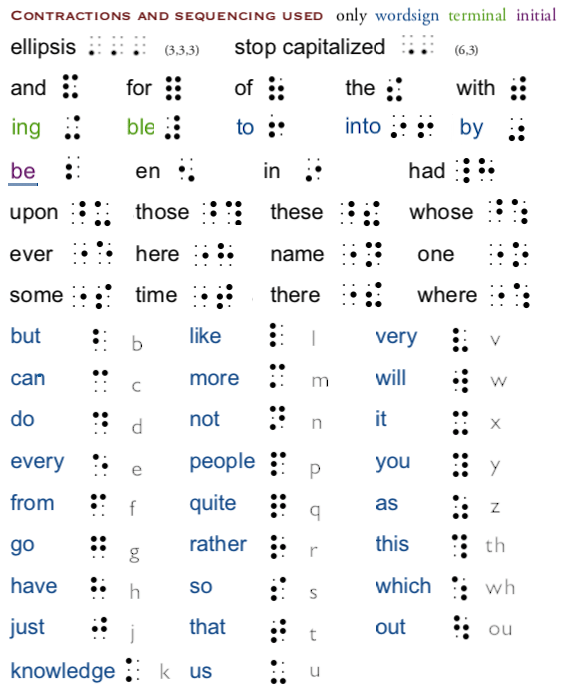
I don’t use all the standard interpretations of english’s braille. I present to you the ones I do use and theirs rules of usage. I put an * when I simplify the use.
♫♫♫
The general rules
The use of contractions must not create ambiguity of meaning, otherwise all letters must be transcribed.
I don’t use any contraction when the word is written on 2 lines*.
No contraction of the last word of the line if it breaks the dynamic of the sentence.
No contraction when we explain an acronym, an abbreviation.
Contractions may be sequenced to one another.
♫♫♫
Terminology
Groupsign: contraction which represents a group of letters.
Wordsign: contraction which represents a complete word.
Composite: consisting of more than 1 character.
Sequence: 2 or more words written without an intervening space.
Initial: at the beginning of a word.
Medial: neither at the beginning nor at the end of a word.
Terminal: at the end of a word.
♫♫♫
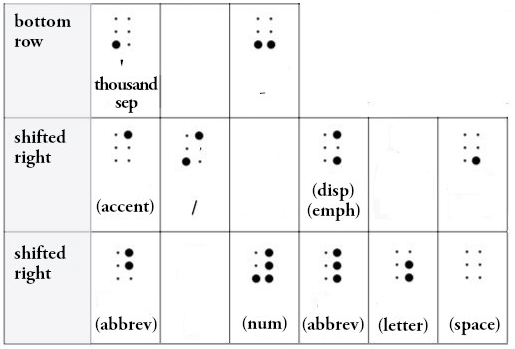
Capitals (dot 6)
1 sign (6)
One letter in capital
Love
2 signs (6, 6)
One word in capital
LONDON
3 signs (6, 6, 6)
All the passage in capital until the sign end of capital
BEETHOVEN’S SYMPONY N°6
capital terminal (6, 3)
End of capital letters
WONDERful
Ellipsis (3*dot 3)
… ellipsis (3, 3, 3)
Life’s … sign
Between 2 words, we put a space on each side
« … is life’s sign. »
After a punctuation sign, unspaced after punctuation
« Life is only … »
Before a punctuation sign, unspaced before punctuation
Life is a symph…
To complete a word, unspaced after the word
♫♫♫
Simple upper groupsigns
Ordinal numbers are formed by adding the appropriate endings to the cardinal numbers.
st and th are 2 simple upper groups that can also be used in words with specific rules, but I only use them in ordinal numbers*.
Examples:
1st (3-4-5-6, 1, 3-4)
We use the specific character st (3-4)
2nd (3-4-5-6, 1-2, 1-3-4-5, 1-4-5):
There is no specific character for nd, we use the characters n and d
3rd (3-4-5-6, 1-4, 1-2-3-5, 1-4-5)
There is no specific character for rd, we use the characters r and d
57th (3-4-5-6, 1-5, 1-2-4-5, 1-4-5-6)
We use the specific character th (1-4-5-6) from the 4th decade
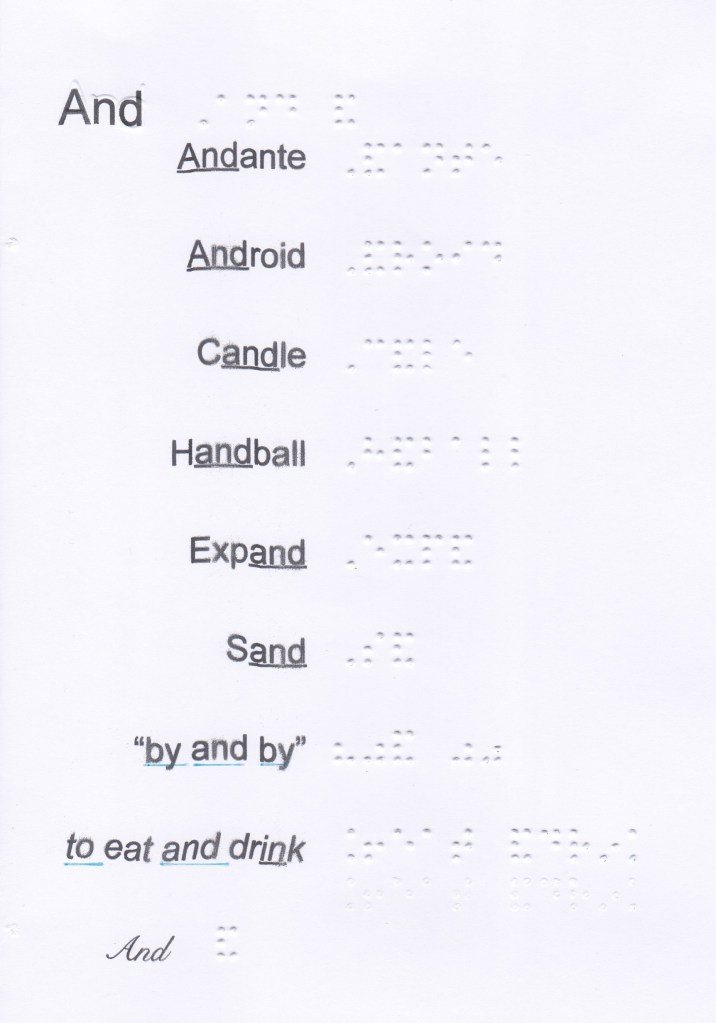
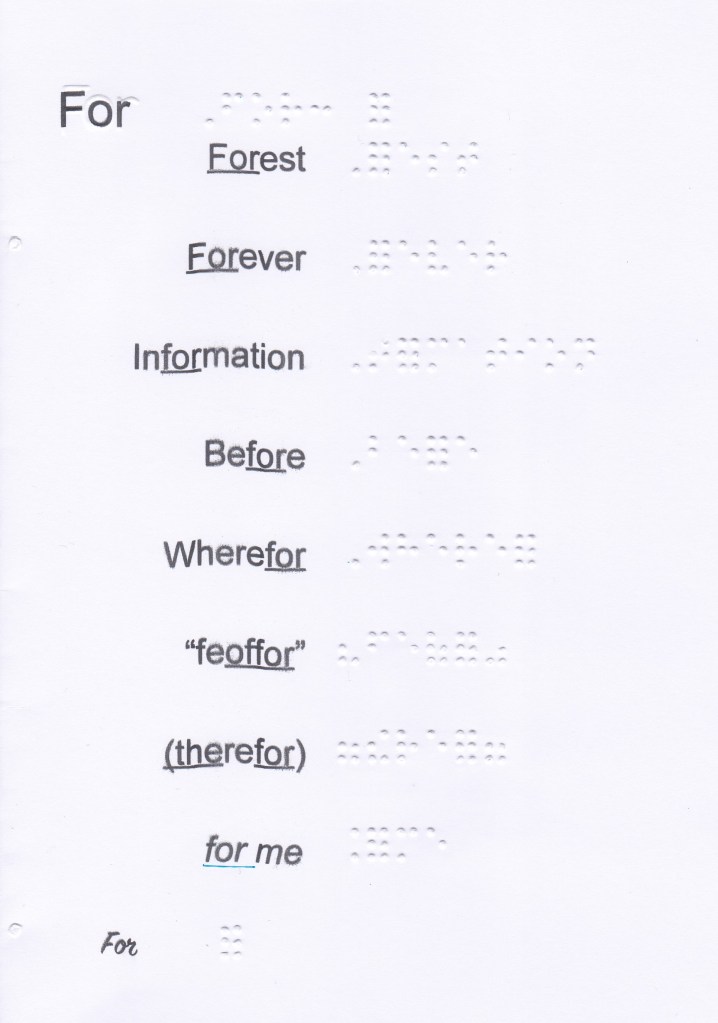
These simple upper groupsigns may be used also as wordsigns.
and
for
of
the
with
Should generally be used wherever the letters they represent occur, in initial, medial or terminal position. Instead of for The, the composite wordsigns these, there, mother, father, are priority. See Booklet « Braille: wordsigns ».
These simple upper groupsigns may not be used at the beginning of a word.
ing
ble
They may be used in the middle or at the end of a word but I use them only at the terminal position*.
♫♫♫
Lower contractions
Like wordsign
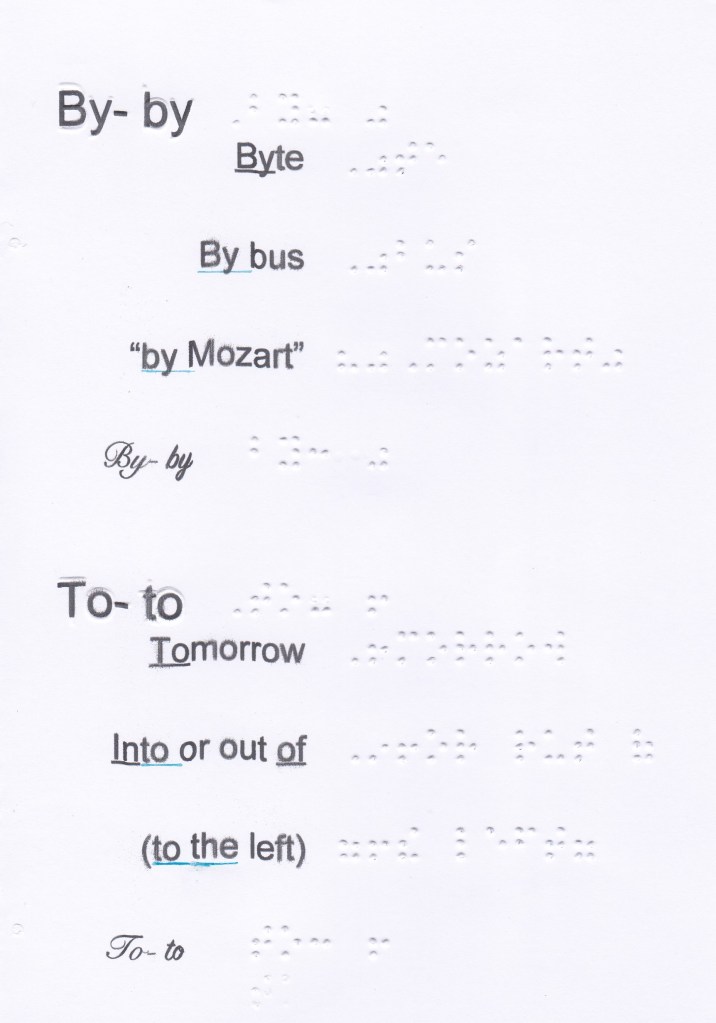
They must not be used as parts of words.
to
into
by
Not be used before or after the hyphen or apostrophe; before the ellipsis; before other punctuation ; before computer code indicators or electronic addresses.
Specific rules with mathematical and numerical signs, but I don’t use them, in this case I always write letter by letter*.
At initial position
It can be after a hyphen in a hyphenated compound word.
be
example:
beloved
It can be a wordsign.
It must be an unstressed syllable, instead of
being
bein’
Sequencing
And, for, of, the, with, to, into, by should be written unspaced from a word which follows on the same braille line, even when a sense break or natural pause is present. Instead of
to be
be is not contracted after to which is contracted*.
Initial-Medial-Terminal groupsings
In also used as wordsign, but not en.
in not iness, ing
en not ence, ment, enough*, silencer
They are used wherever the letters they represent occur. Instead of for en not be used when the letters form a word or an element of a hyphenated compound word. See Booklet « Braille: end of letters ».
♫♫♫
Composite wordsigns
These wordsigns may be used as parts of words, subject to the rules which apply to them. There’s a lot of rules, and a lot of composite wordsigns.
I chosen only these based on the sense or pronunciation.
When they retain their meanings as whole words
upon
not coupon
those
not thoseby
these
not hypotheses
whose
examplewhosesoever
When the a is short
had
not haddock
When the stress is on the first e and the letter group not preceded by an e or i
ever
not severe
When the letters it represents are pronounced as one syllabe
here
not heresy
name
not enamel
one
money except ending « oney »
When the letters it represents are pronounced as the word
some
time
sometimes
there
not ethereal
where
not wherever
butwhereupon
Simple upper wordsigns
Just like a word*.
May be preceded or followed by punctuation signs, and may be preceded by the italic or capital signs and by the contractions to, into and by.
Do not use between 2 quote signs*.
Should generally be used before the apostrophe followed by d, ll, re, s, t, ve.
May be used when joined by the hyphen in compound words.
Should not be used for foreign words, or in other cases such as the musical note do “C” for example.
They represent a letter or a simple upper groupsigns which, on their own, between 2 spaces, constitute the meaning of a word.
♫♫♫
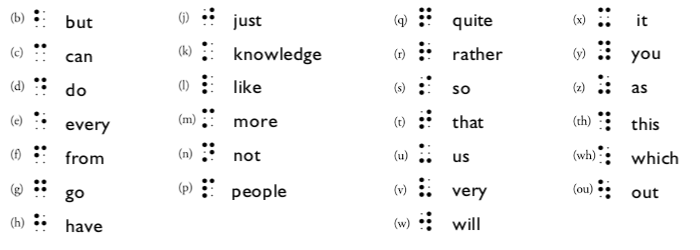
In blue, there’s the contractions I use only as a wordsign
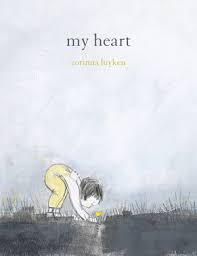
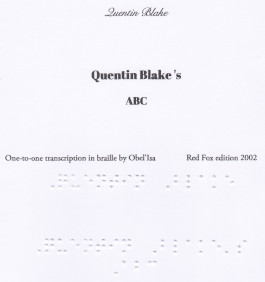
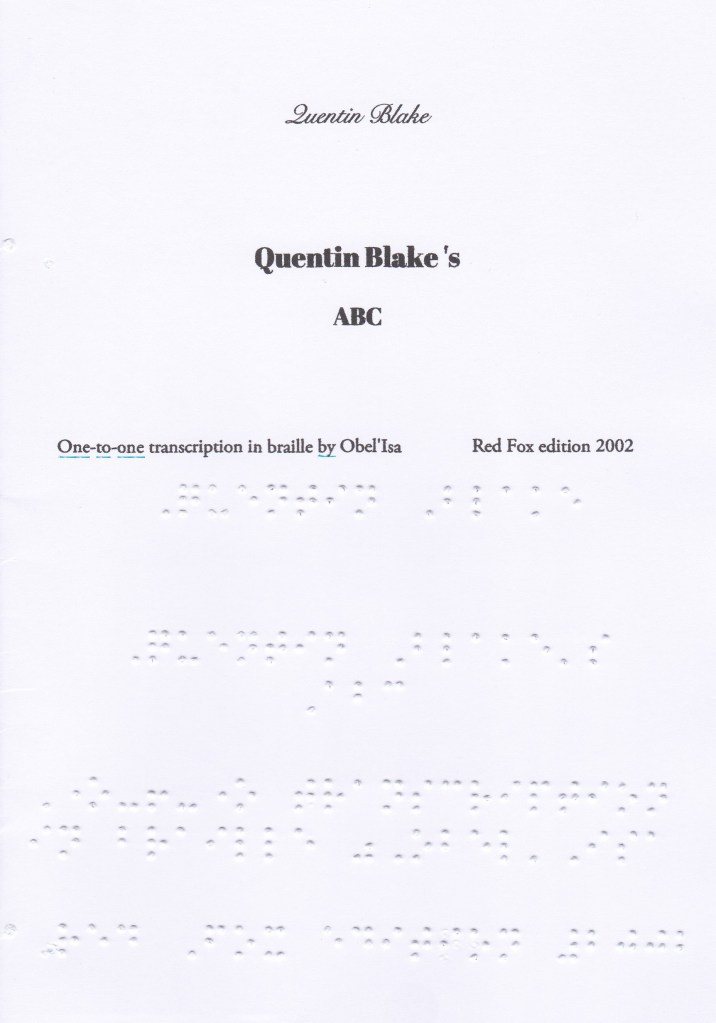
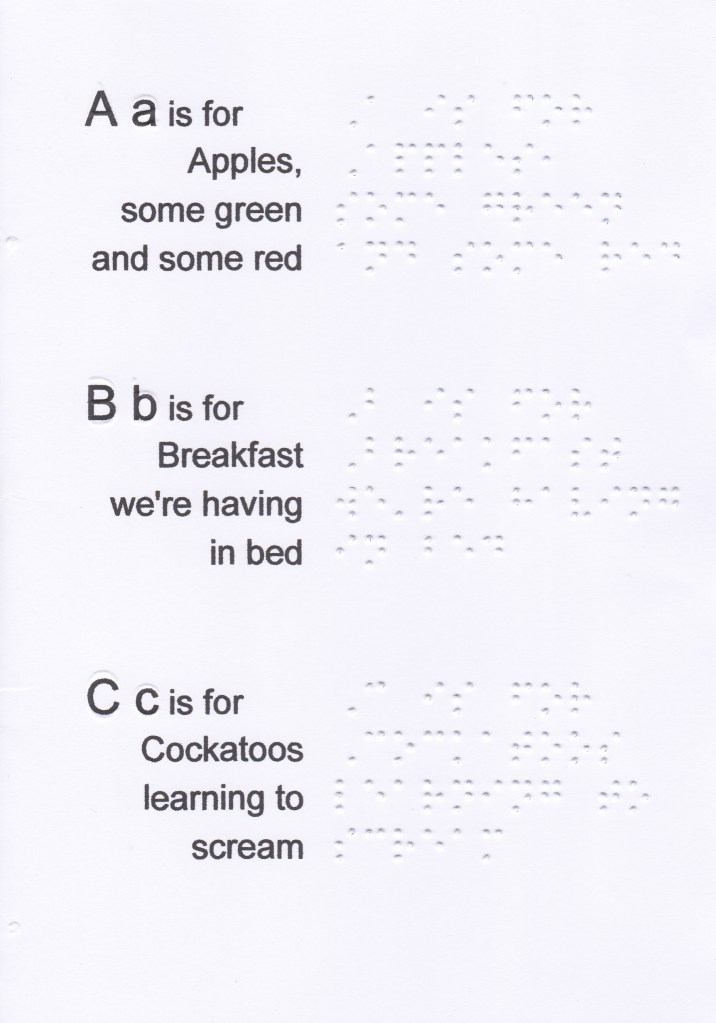
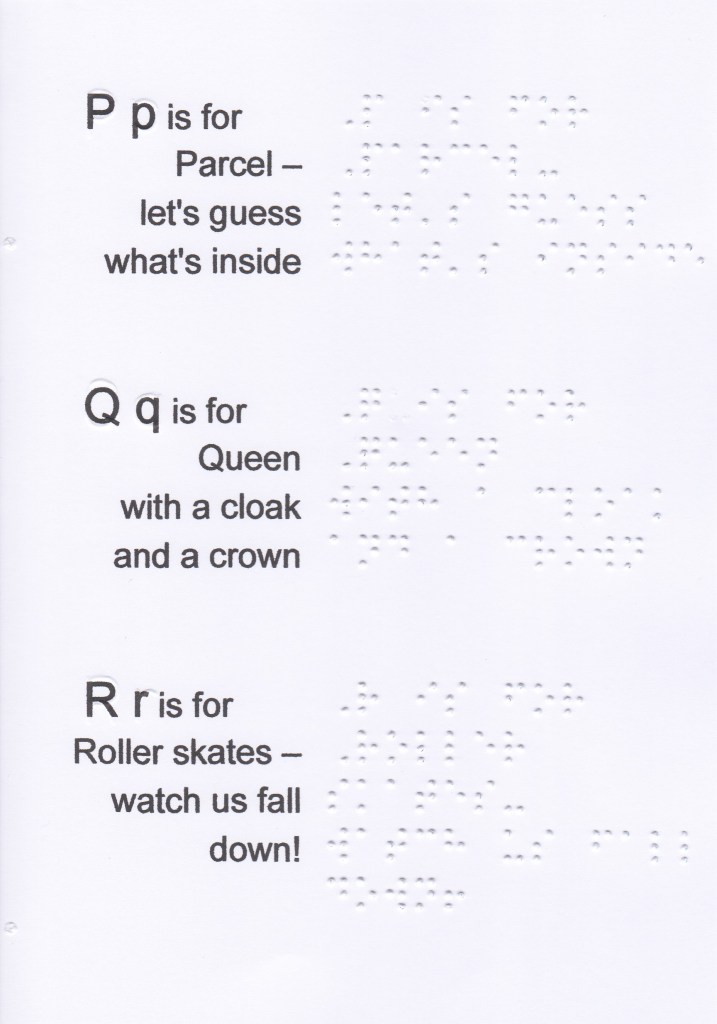
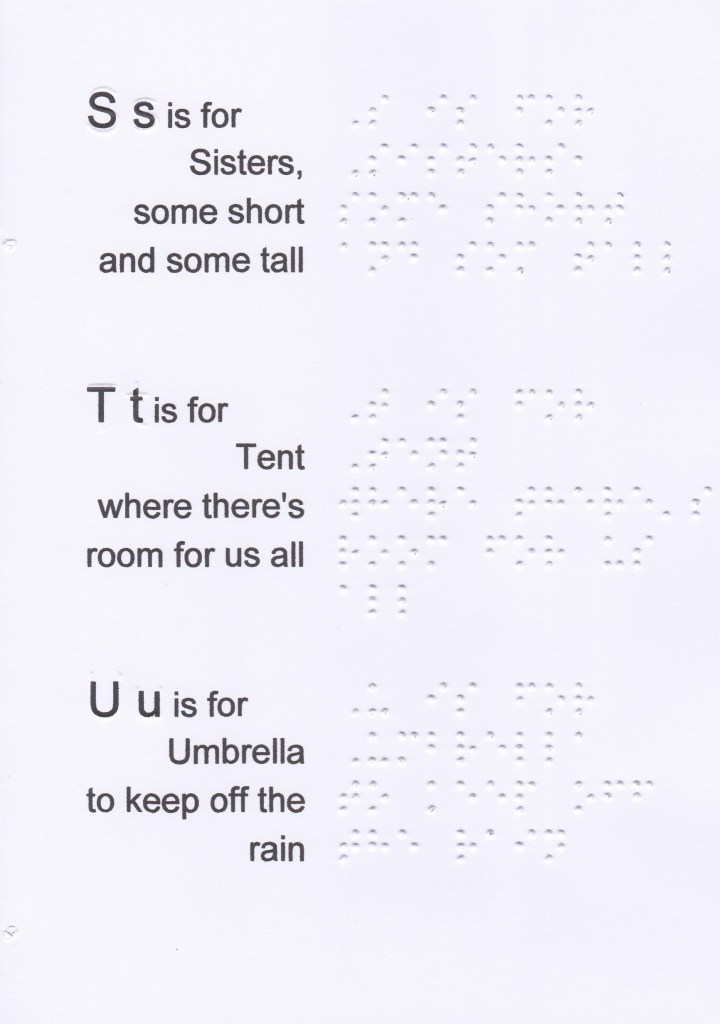
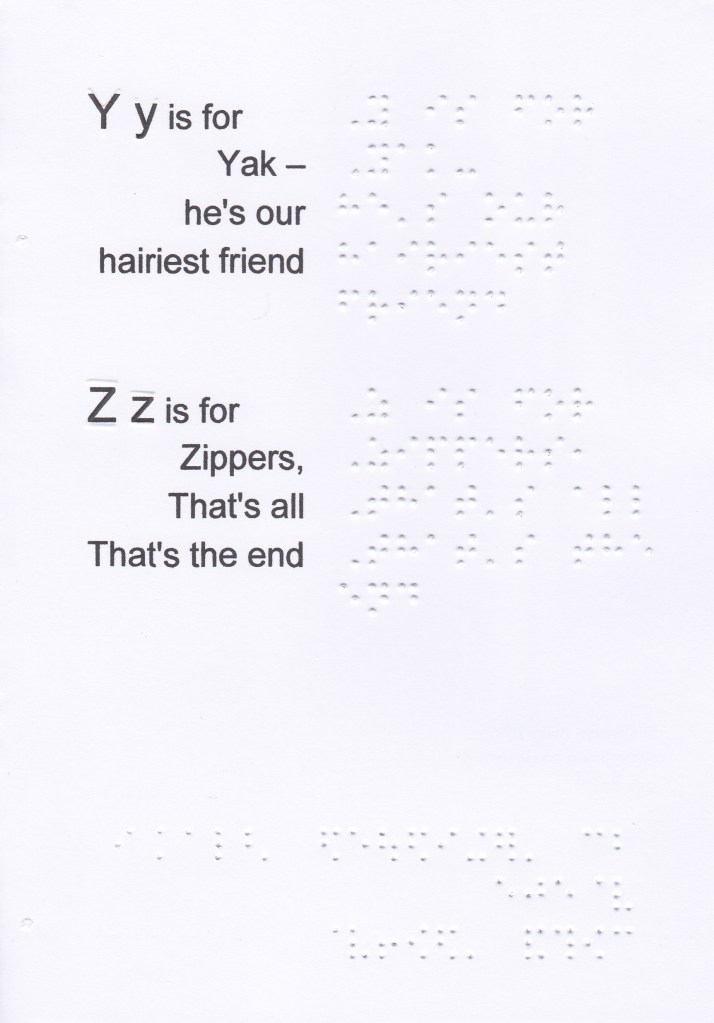
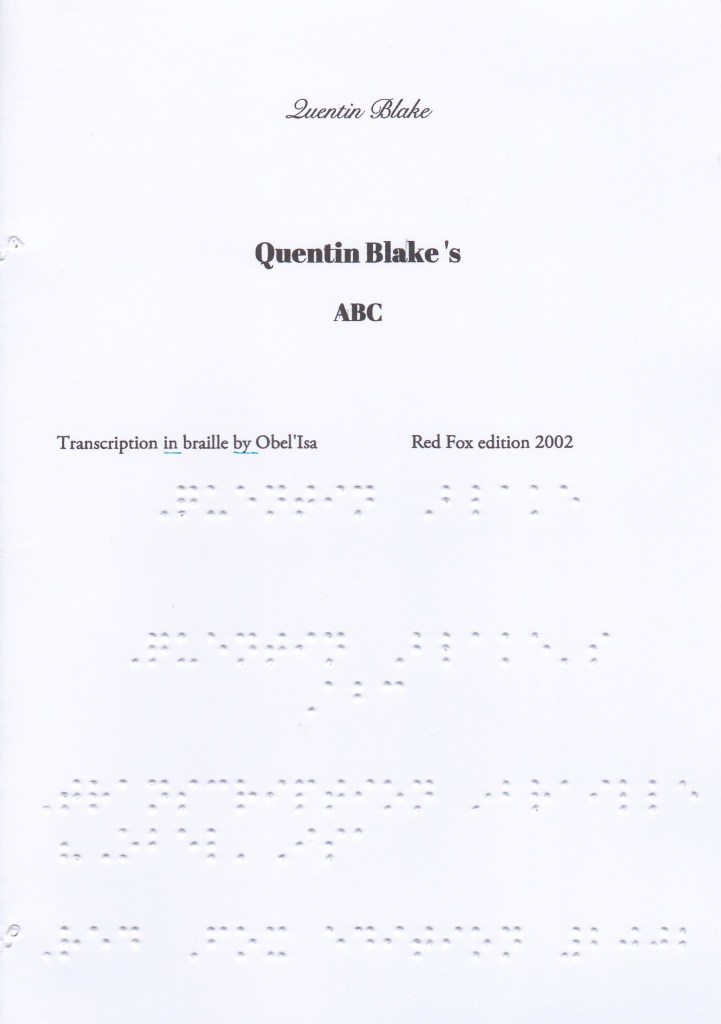
For the transcription, I bought the Red Fox edition published in 2002 by Random House Children’s Books. You can visit their Website: – https://www.penguin.co.uk/children.
♫♫♫
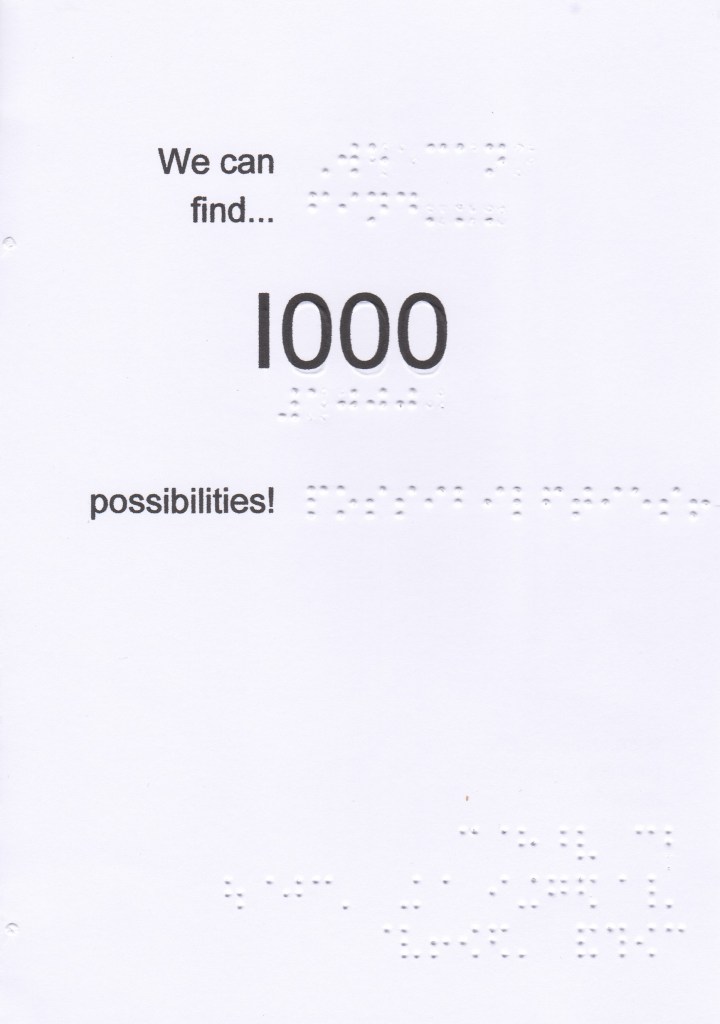
Click on the first image to enlarge it and scroll through the pages like in the book.
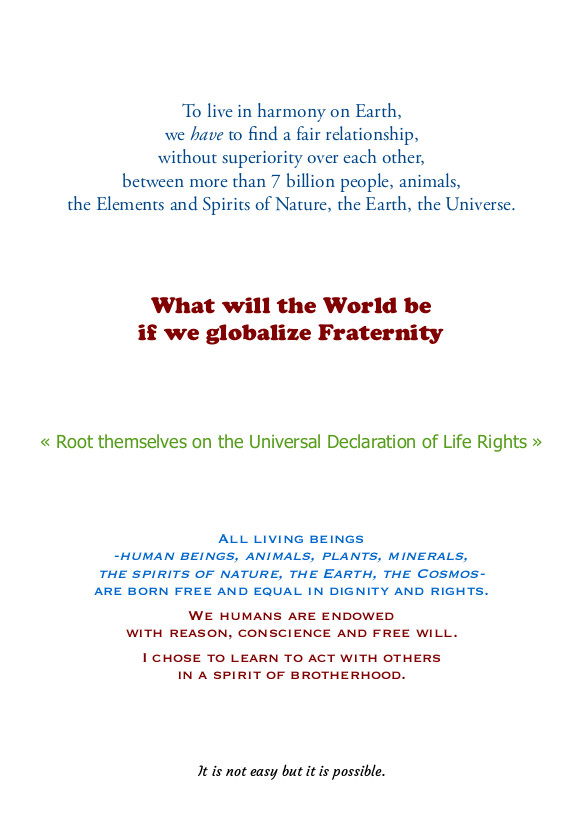
To deeply root on the Universal Declaration of Life Rights
All living beings -human beings, animals, plants, minerals, the spirits of nature, the Earth, the Cosmos- are born free, good and equal in dignity and rights.
We humans are endowed with reason, conscience and free will.
I chose to learn to act with others in a spirit of brotherhood.
Humanity, in life’s scale, it is a one year child for a human life. We know that he will walk, pee in the chamberpot, eat alone, work … but for the moment, he is totally dependent on his environment and what society teaches him.
It’s up to us to build a world in image of the fraternity to friendship, love, joy
♫♫♫
Click on the first image to enlarge it and scroll through the pages like in the book.
You can diffuse freely the pdf file that it was written.
Peace on Earth will be. When the world freely will express The Dignity « inherent to all members of the Human Family »
In the course of my investigation of the search for our origins, I became aware that the world in which we live where reigns inequalities, violence, misery is not the result of our Humanity but the result of choices -individuals and collectives, present and past- made to learn by experiment -by the lived- « Who we are – Where we come from – Where we are going ». Change of scale offers another look:
In our reality, Life appeared at a single time and place that Science calls « The Big Bang ». So we come ALL of this common place that allowed Life, that I name « The Source » because it flows in US.
♫♫♫
Click on the first image to enlarge it and scroll through the pages like in the book.
You can diffuse freely the pdf file that it was written.
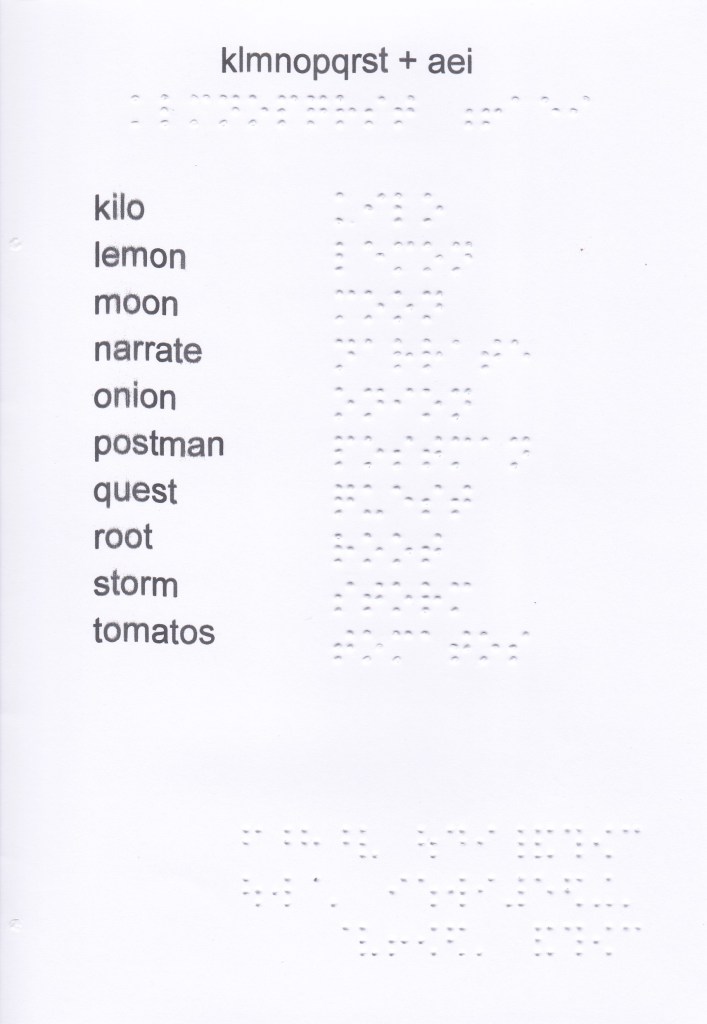
From the 3rd decade, we find the last letters of the alphabet and then the specific characters of the language.
I made the last 2 booklets by taking the characters from series 4 to 8 according to their grammatical fonction.
♫♫♫
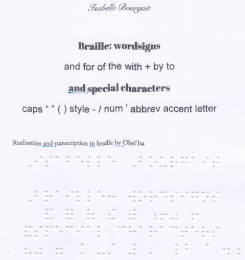
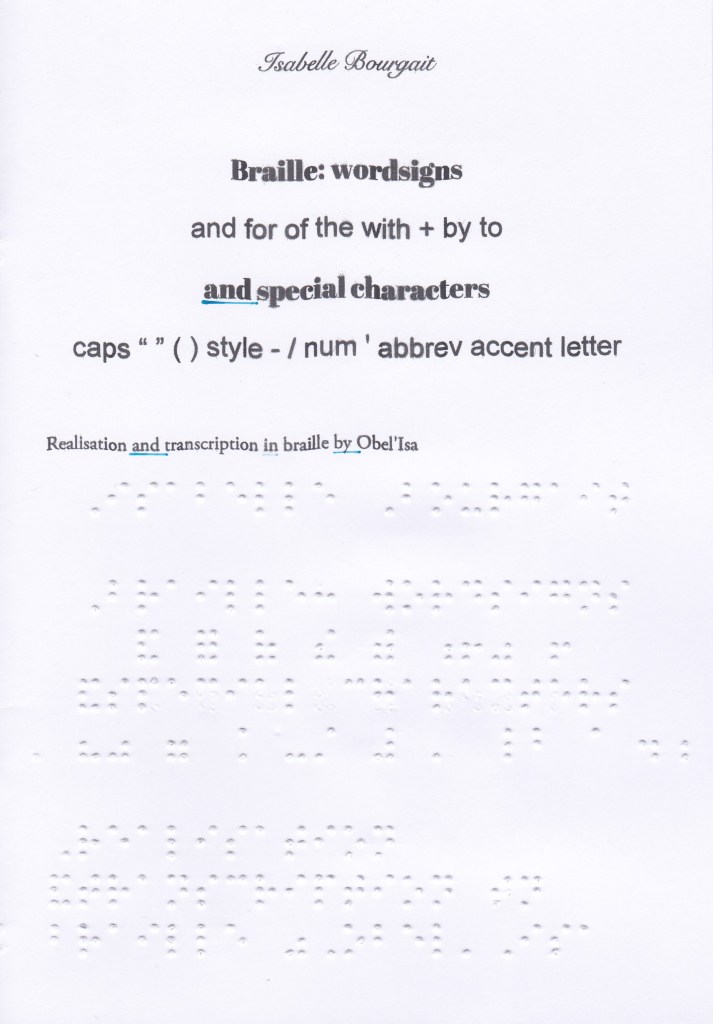
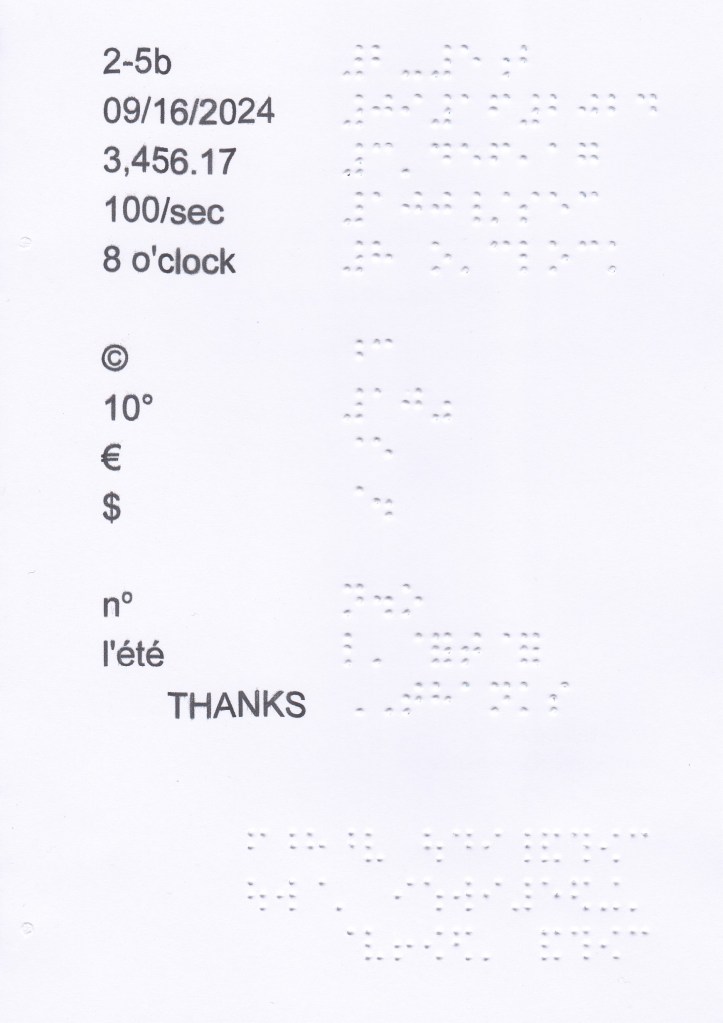
In this booklet you will find the wordsigns, upper groupsigns and 2 lower contractions sequenced, the numbers (in the 1st decade) as well as the main characters for laying out short stories, writing numbers and some particularities such as dates, time, some abbreviations, etc. This is not exhaustive of everything that can be done in Braille (tables, mathematical operations, etc.).
Wordsigns are groups of letters that can be use as a word or as part of words, at the beginning, middle or end. There are many types of contractions and different rules, priority between them, that’s why I will only use the wordsigns presented in this booklet. All other contractions will be translated letter by letter.
The 5 upper groupsigns are in the 3rd decade.
To and by are in the 5th decade. This braille code is also used for punctuation. If ambiguity may arise, it will be necessary to translate letter by letter. We found also the contraction en and in, see in the previous booklet (soon), and some stylistis effect characters present in this booklet.
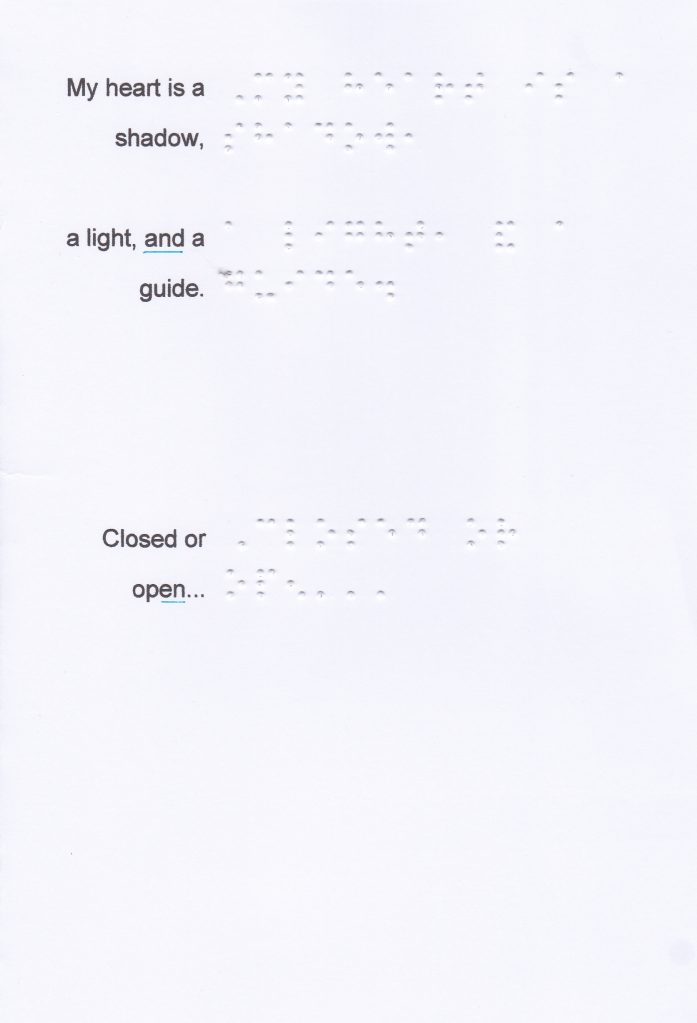
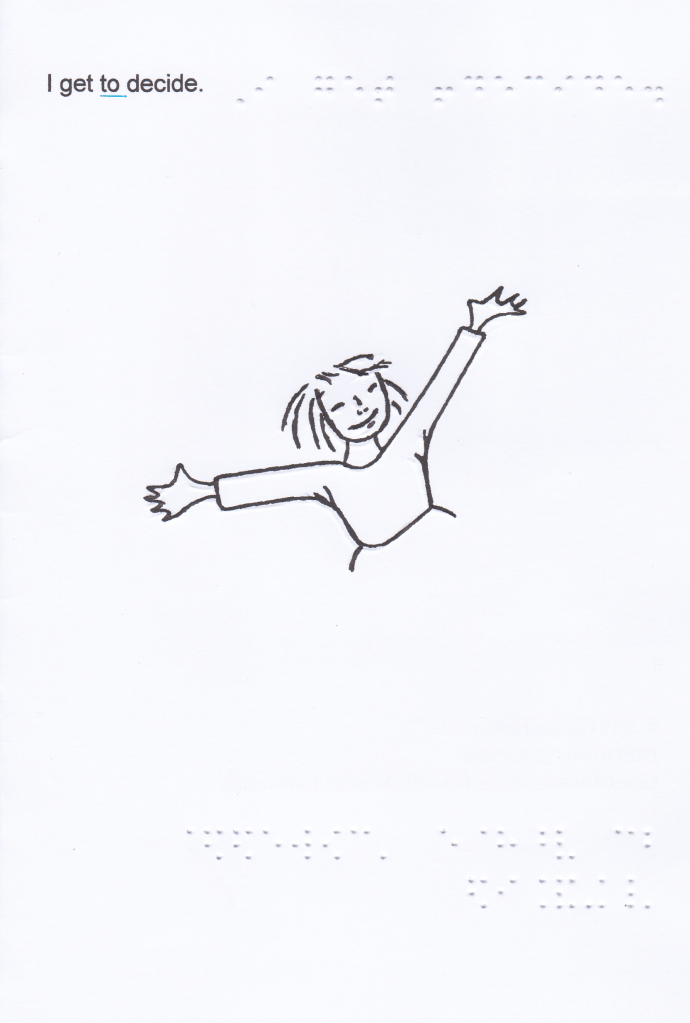
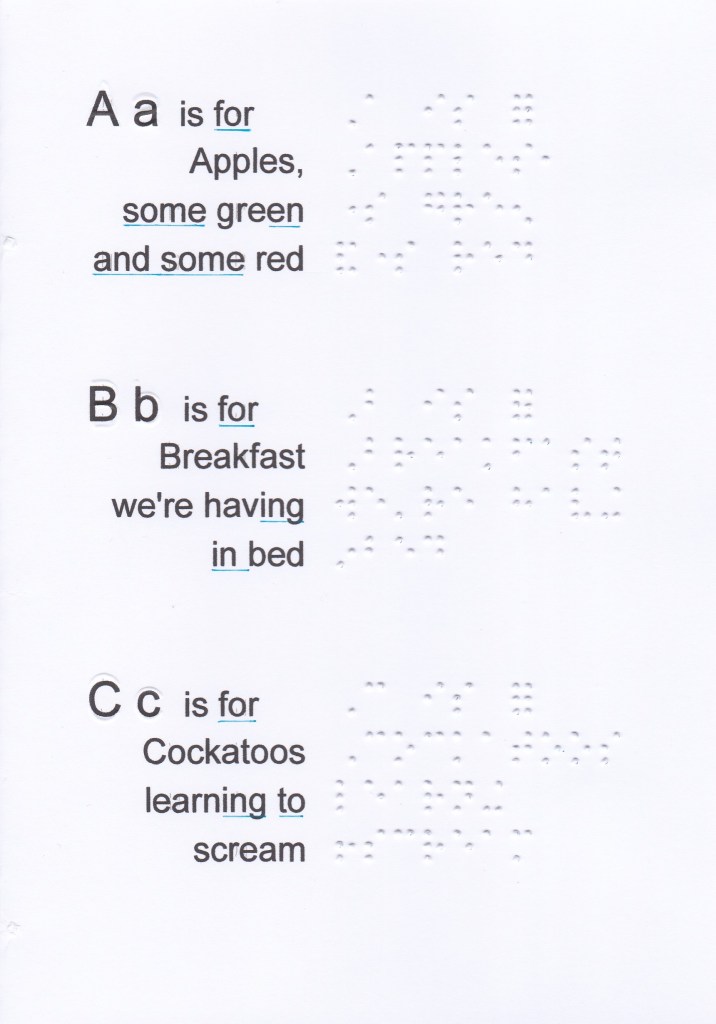
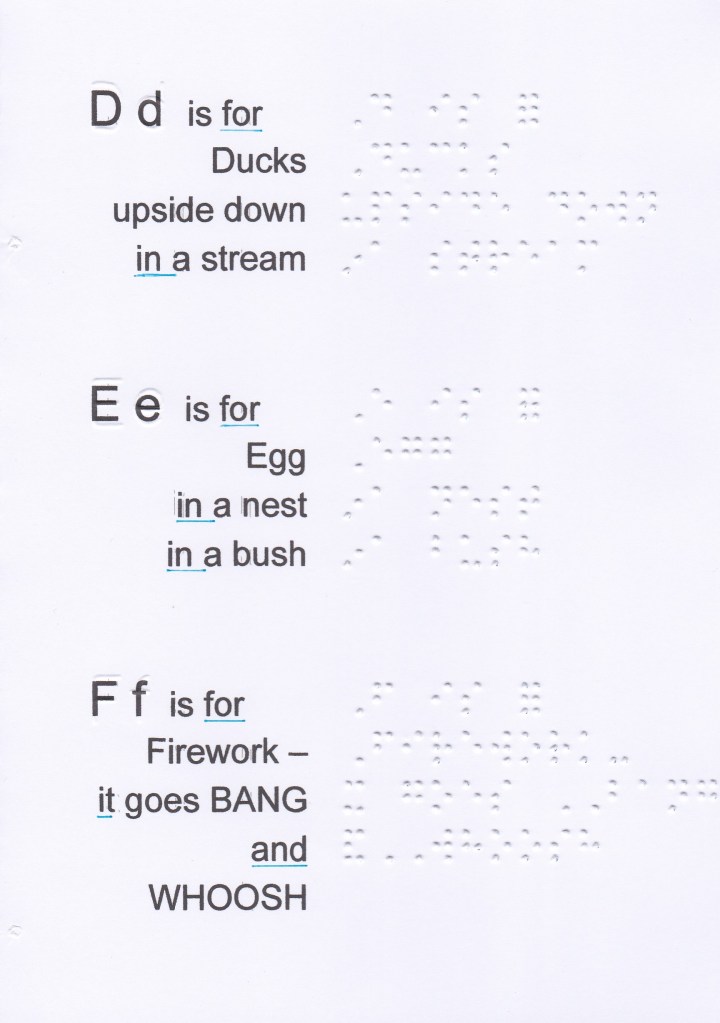
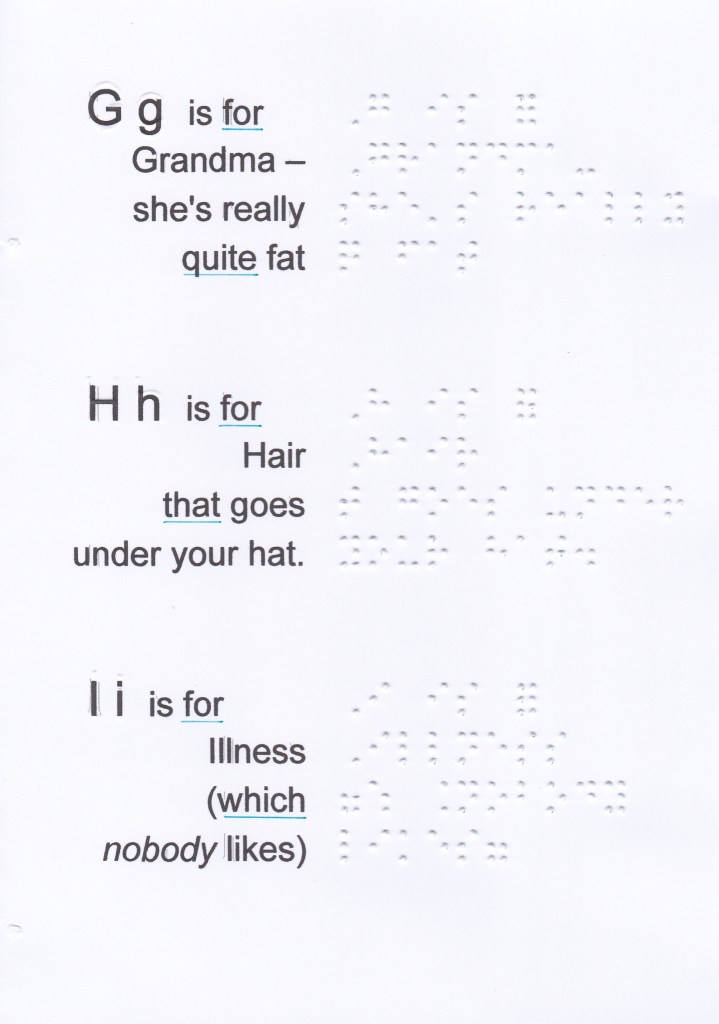
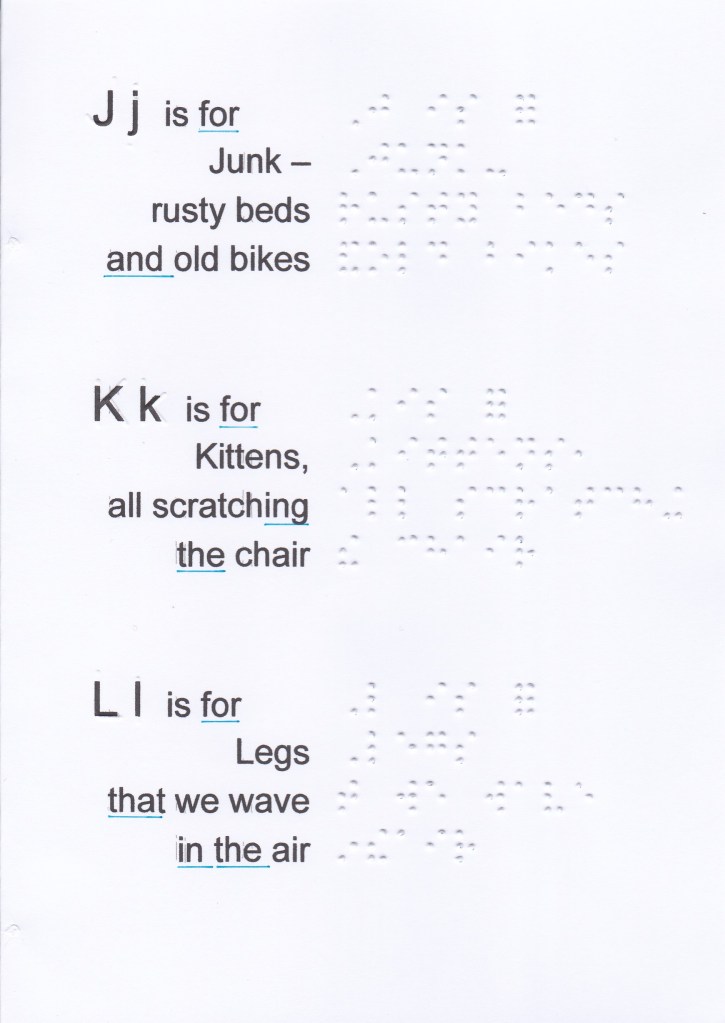
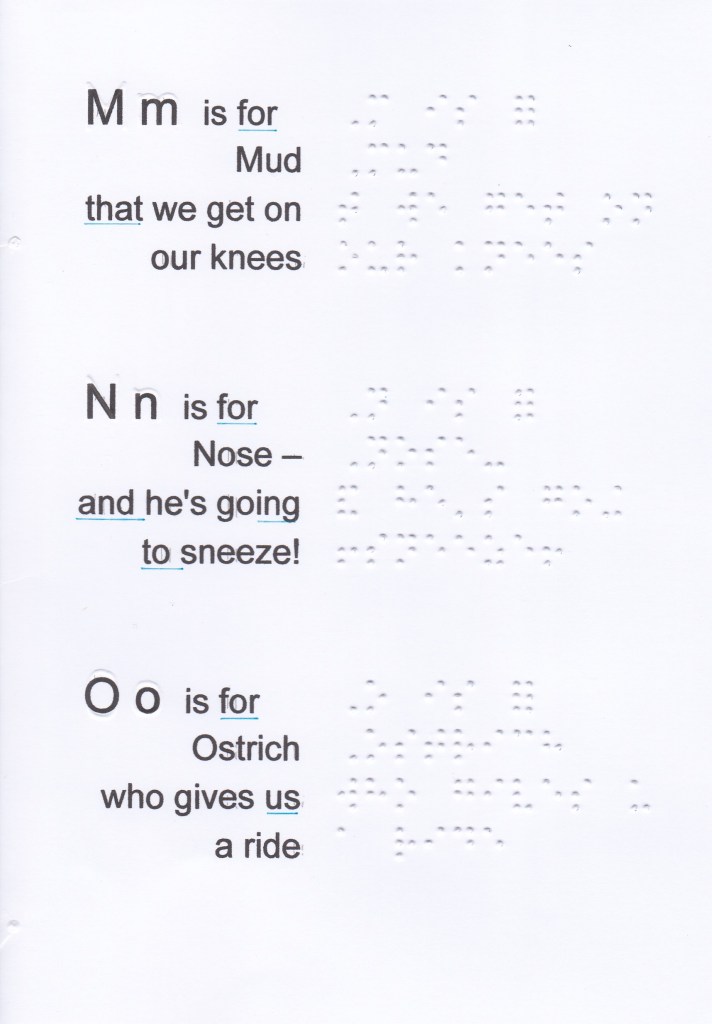
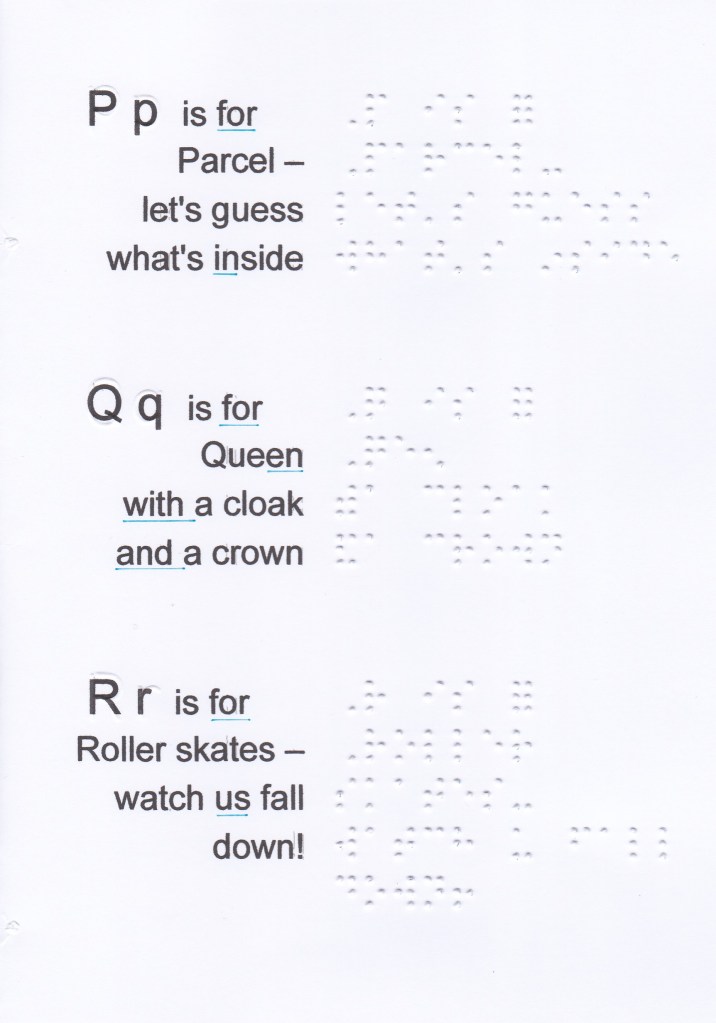
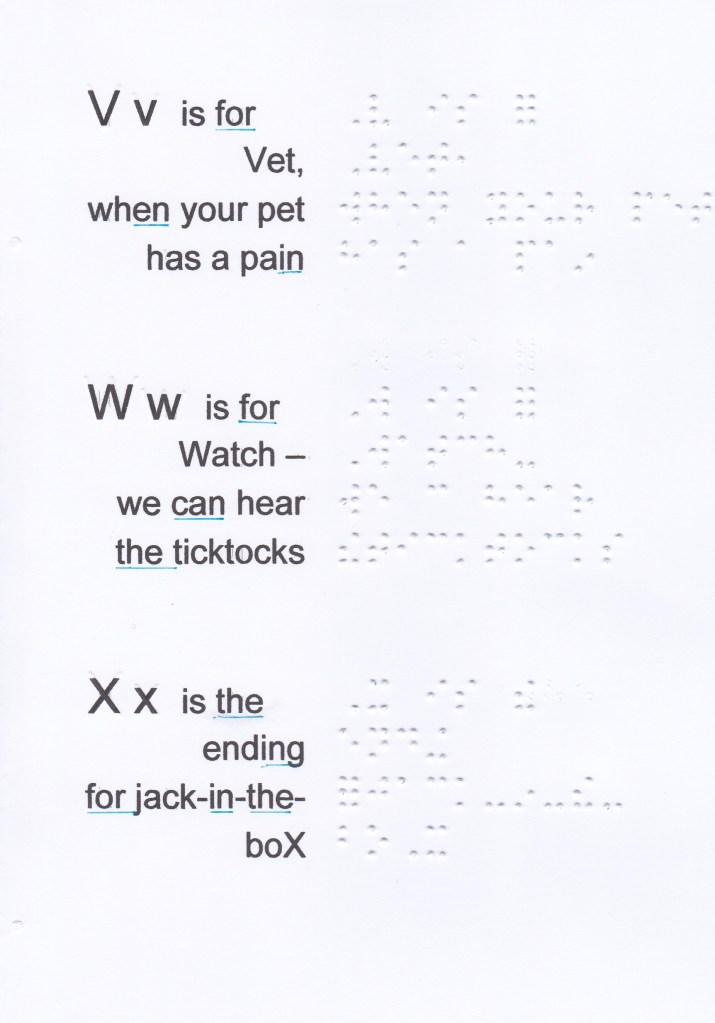
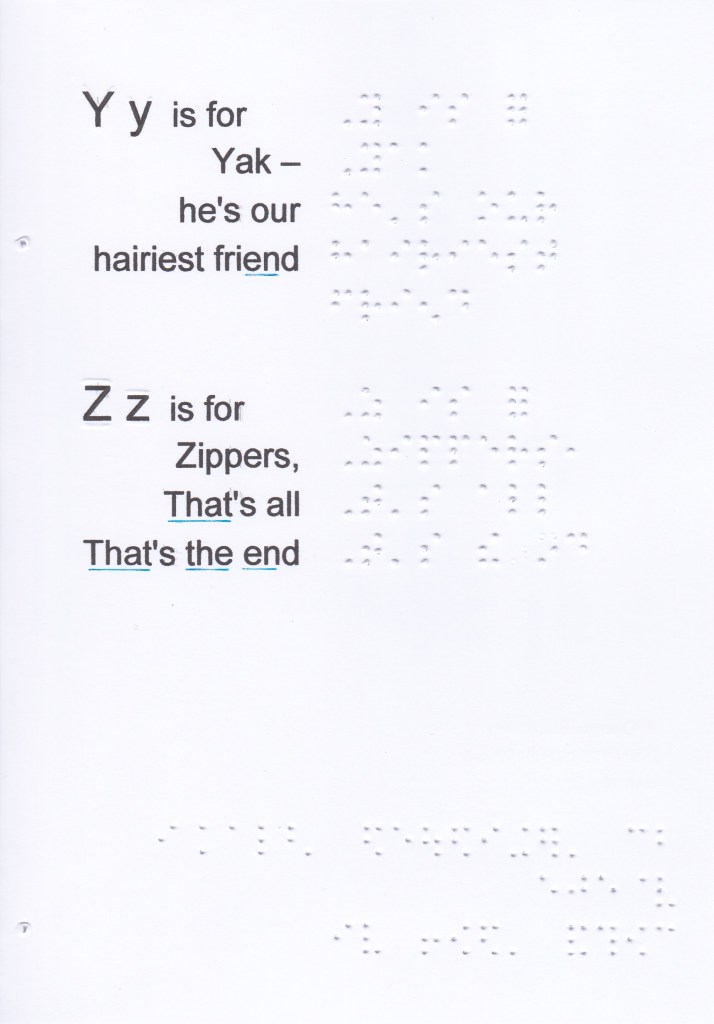
And, for, of, the with, to, by, in, into contractions should be written unspaced from a word which follows, even when a sense break or natural pause is present. That’s why I underline the word in turquoise with or without the space depending on the dynamics of the sentence.
In the other decade, there are the retained stylistic effect characters.
Isabelle Bourgait
♫♫♫
Click on the first image to enlarge it and scroll through the pages like in the book.
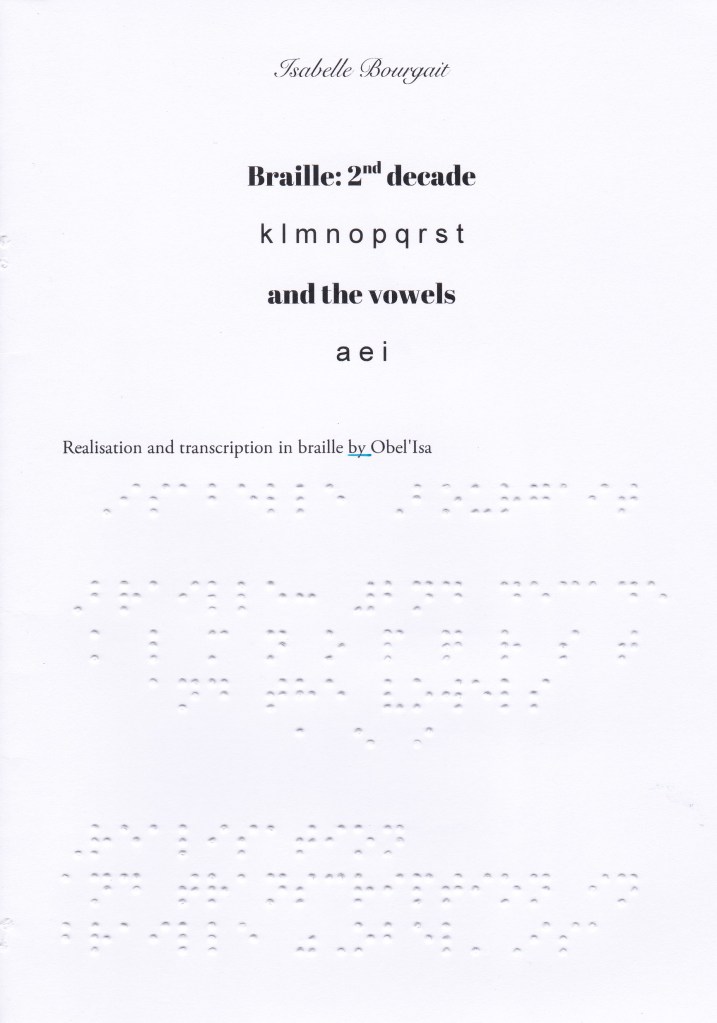
From the 3rd decade, we find the last letters of the alphabet and then the specific characters of the language.
I made the last 2 booklets by taking the characters from series 4 to 8 according to their grammatical fonction.
♫♫♫
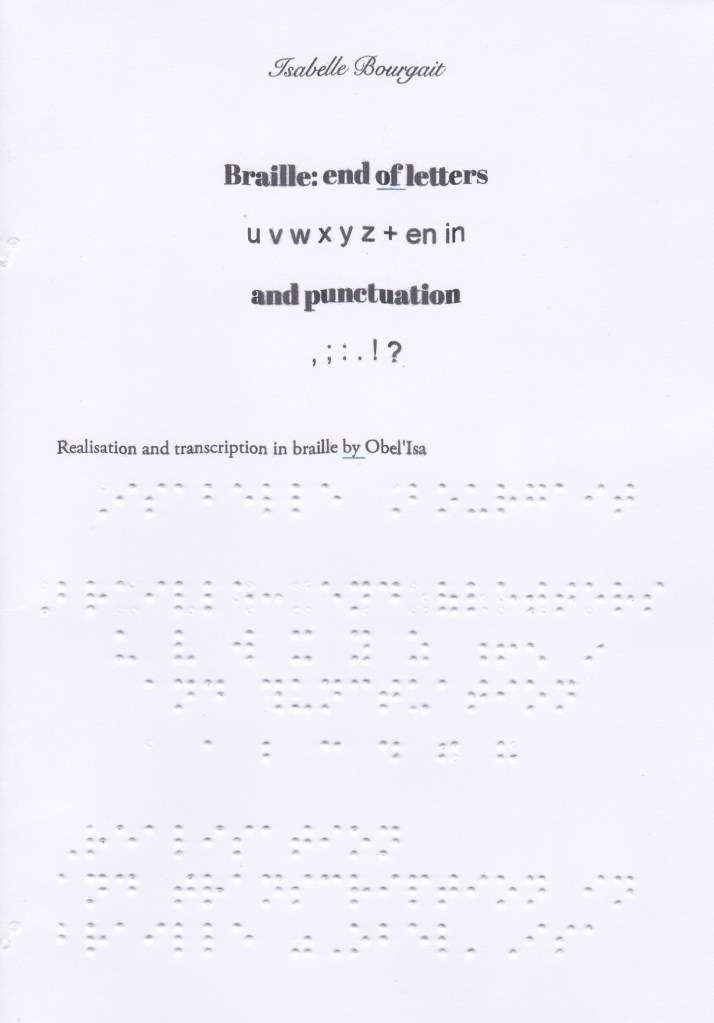
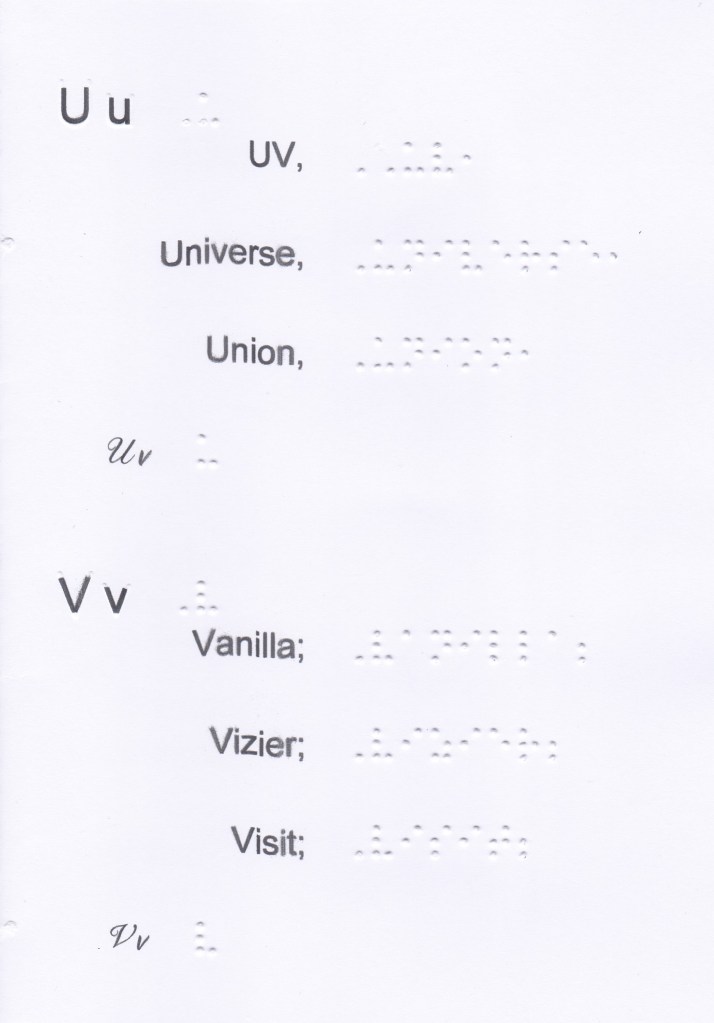
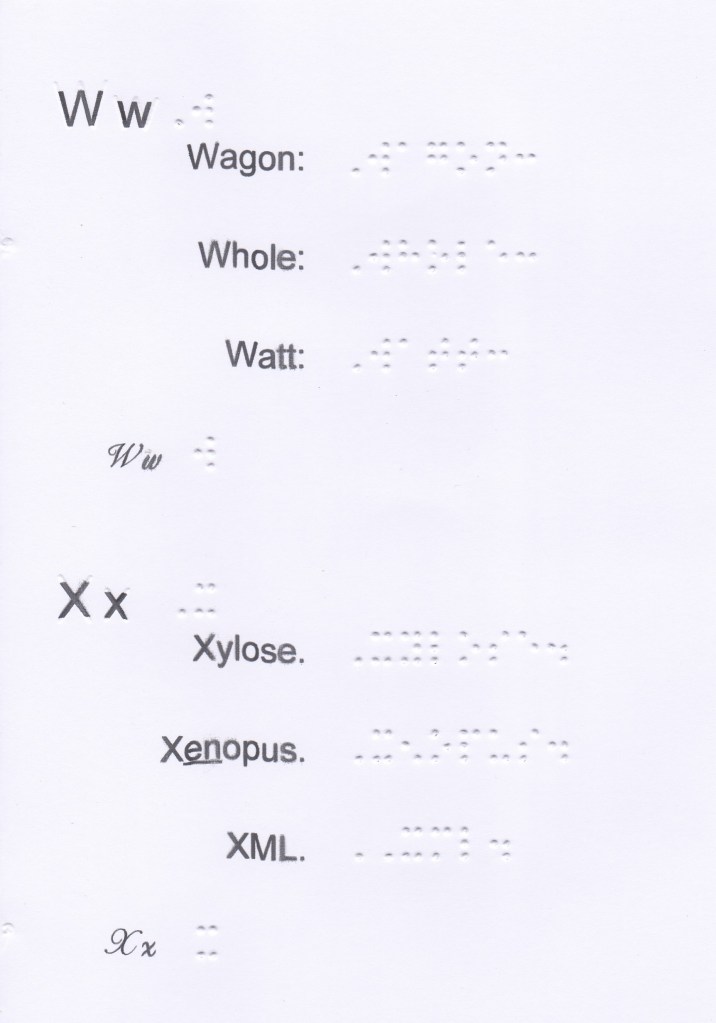
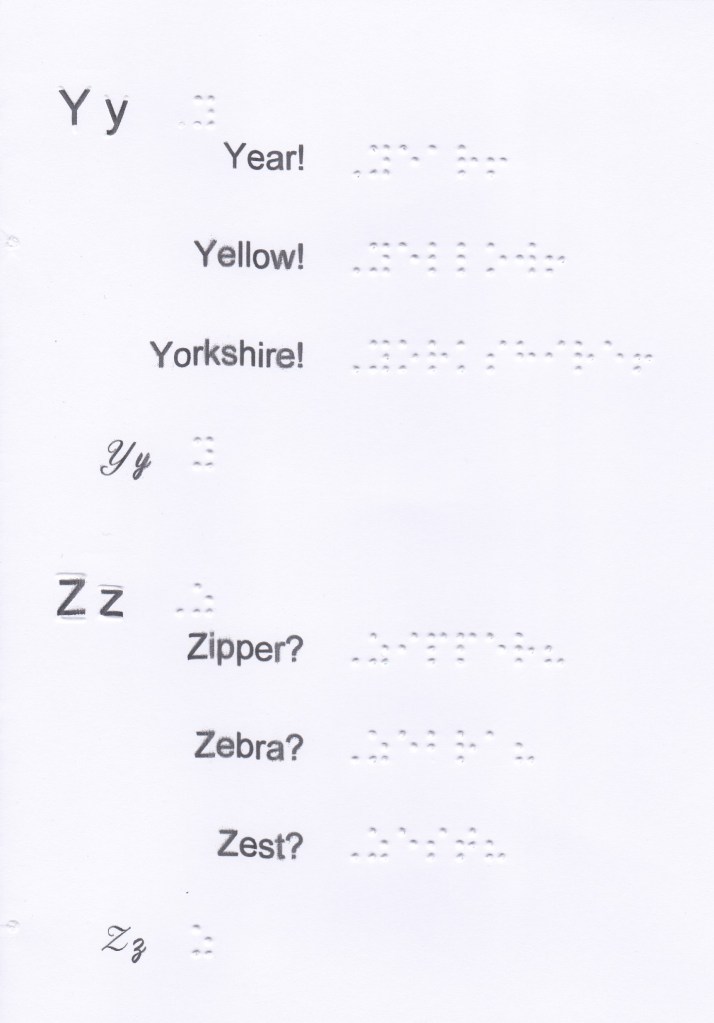
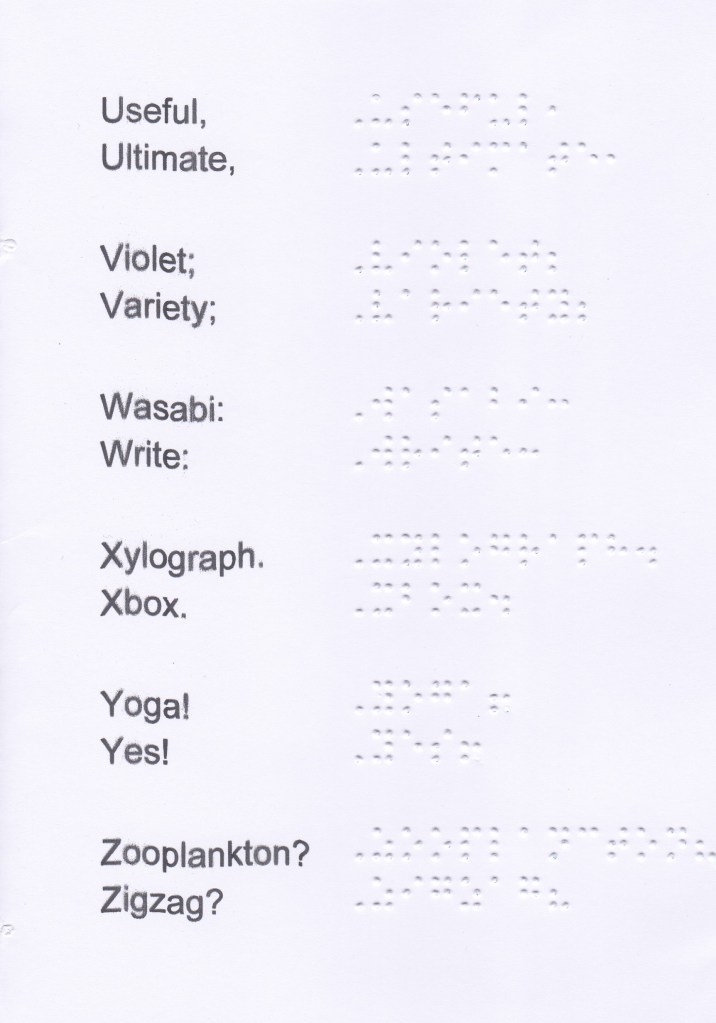
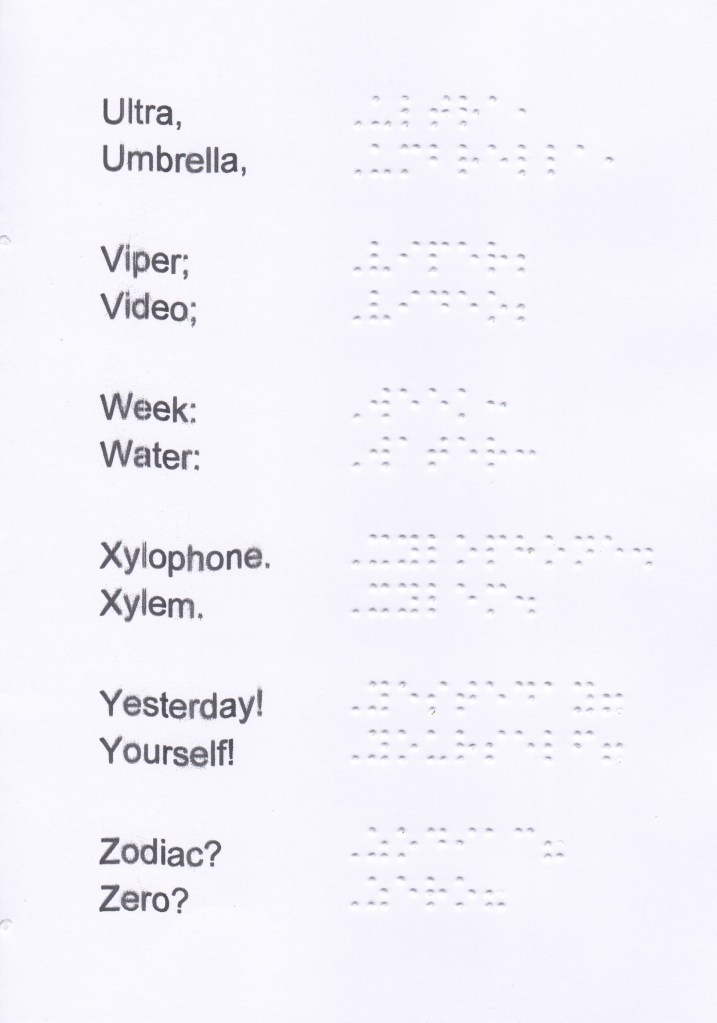
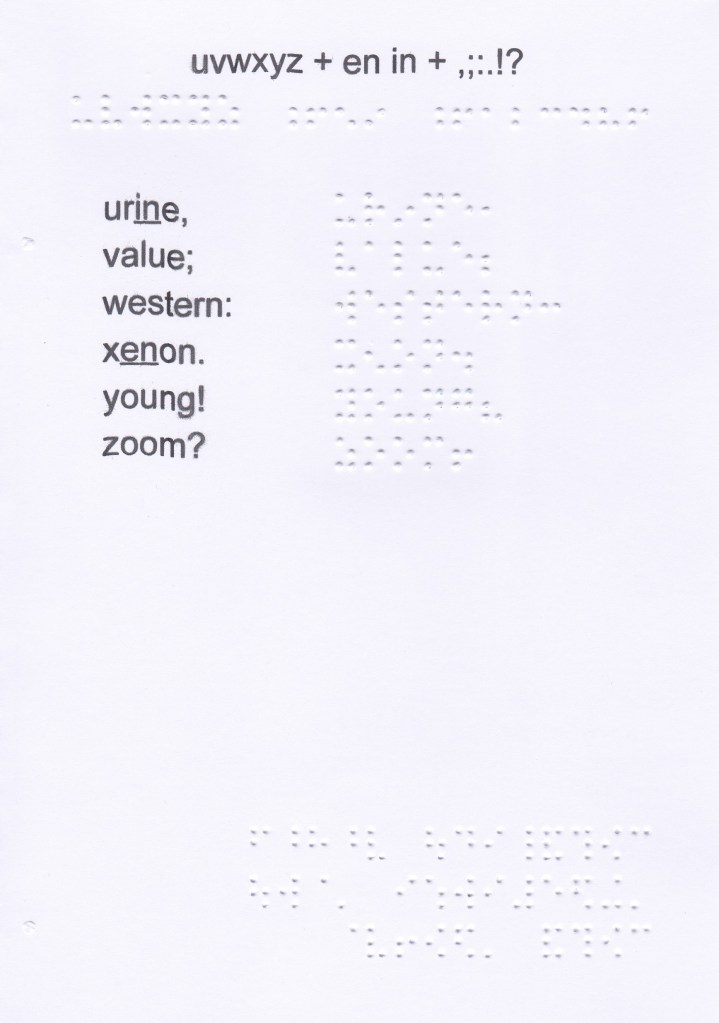
In this booklet you will find the last letters of the alphabet, 2 groupsigns as well as the punctuation. I have removed the stylistic effects.
The last letters of the alphabet are divided into 2 decades because at the time of Louis Braille, the letter w being little used, which is why he put it in the 4th series, while the letters from u to z are in the 3rd decade.
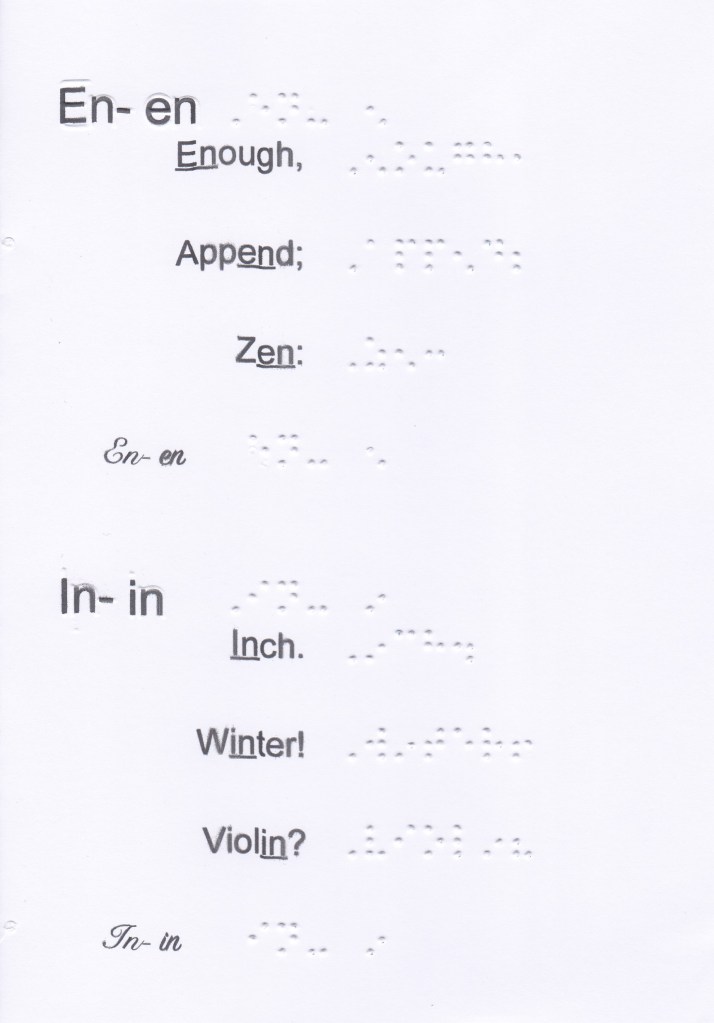
In the fifth decade there is the punctuation, and the Initial-Medial-Terminal Groupsigns en and in.
In is also used as wordsign which should be written unspaced from a word which follows, even when a sense break or natural pause is present.
Isabelle Bourgait
♫♫♫
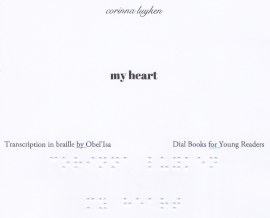
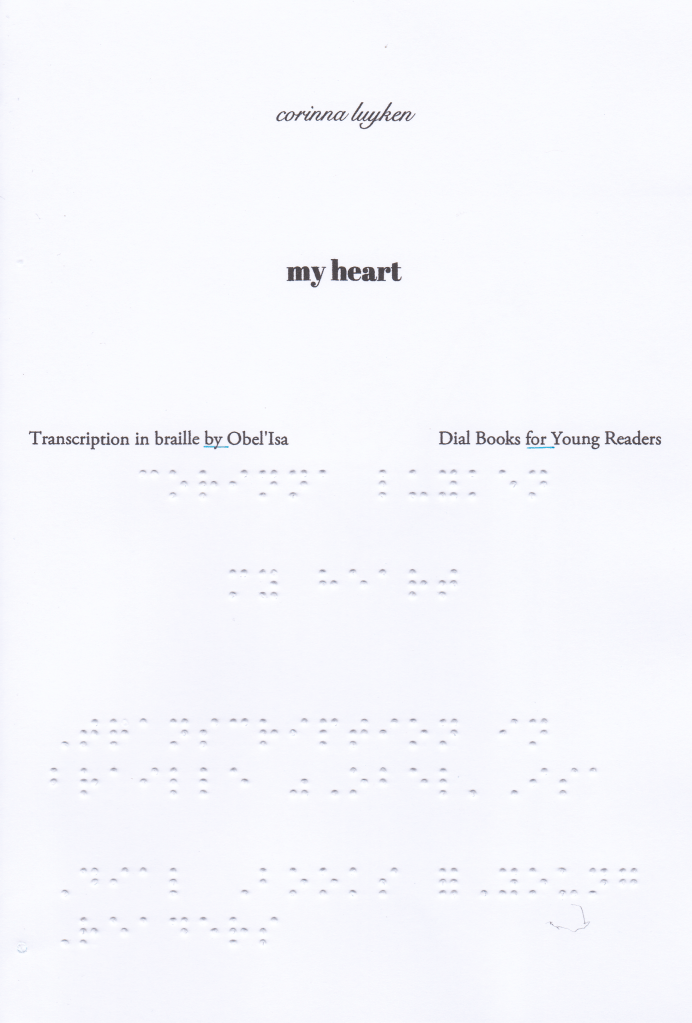
Click on the first image to enlarge it and scroll through the pages like in the book.












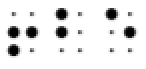
 ellipsis (3, 3, 3)



 (3-4-5-6, 1, 3-4)
 (3-4-5-6, 1-2, 1-3-4-5, 1-4-5):
  (3-4-5-6, 1-4, 1-2-3-5, 1-4-5)
 (3-4-5-6, 1-5, 1-2-4-5, 1-4-5-6)




 not iness, ing
 not ence, ment, enough*, silencer















 except ending « oney »

































 Ki-Regeneration ®