
Version française
Every time I see the notion of the expansion of the Universe appear, my cells react and awaken in me a feeling that it is false, « No, the Universe is not expanding. »
Nothing is lost, nothing is created, everything is transformed.
Here are 3 book excerpts to shed light on my thoughts:
- « The Biology of Belief » by Bruce Lipton, p103
Humans and a number of other higher mammals have evolved a specialized region of the brain associated with thinking, planning, and decision-making called the prefrontal cortex. This portion of the forebrain is apparently the seat of the “self-conscious” mind processing. The self-conscious mind is self-reflective; it is a newly evolved “sense organ” that observes our own behaviors and emotions. The self-conscious mind also has access to most of the data stored in our long-term memory bank. This is an extremely important feature allowing our history of life to be considered as we consciously plan our futures.
Endowed with the ability to be self-reflective, the self-conscious mind is extremely powerful. It can observe any programmed behavior we are engaged in, evaluate the behavior, and consciously decide to change the program. We can actively choose how to respond to most environmental signals and whether we even want to respond at all. The conscious mind’s capacity to override the subconscious mind’s preprogrammed behaviors is the foundation of free will.
However, our special gift comes with a special pitfall. While almost all organisms have to actually experience the stimuli of life first-hand, the human brain’s ability to “learn” perceptions is so advanced that we can actually acquire perceptions indirectly from teachers. Once we accept the perceptions of others as “truths,” their perceptions become hardwired into our own brains, becoming our “truths.” Here’s where the problem arises: what if our teachers’ perceptions are inaccurate? In such cases, our brains are then downloaded with misperceptions. The subconscious mind is strictly a stimulus-response playback device; there is no “ghost” in that part of the “machine” to ponder the long-term consequences of the programs we engage. The subconscious works only in the “now.” Consequently, programmed misperceptions in our subconscious mind are not “monitored” and will habitually engage us in inappropriate and limiting behaviors.
- Molecules of emotion by Candace B. Pert, p135
DO EMOTIONS ORIGINATE IN THE HEAD OR THE BODY
Until 1984 I had assumed that Wilder Penfield’s famous human experiments had proved beyond a shadow of a doubt that emotions originate in the brain. But that year, I went to give a lecture et the Second International Meeting of the Society for the Study of Emotion, which was held at Havard, and there I met Eugene Taylor, the scientific historian in the psychology department. He was excited about the lecture I had just delivered, in which I presented the theory of peptides and other ligands as the biochemicals of emotion. Eugene wanted to know where I stood on the famous James-Cannon debate, which, he reminded me, was about the ultimate sources of emotions. Do they originate in the body and then get perceived in the head, where we invent a story to explain them, as William James said? Or do they originate in the head and trickle down to the body, as Walter Cannon posited?
In 1884, while an assistant professor of philosophy at Havard, William James had published his essay “What Is an Emotion?” basing his theory on his own introspective observation and a general knowledge of physiology. He said he had concluded that the source of emotion is purely visceral, that is, originating in the body and not cognitive, originating in the mind, and that there is probably no brain center for emotional expression. We perceive events and have bodily feelings, and then after the perception, which joggles our memories and imagination, we label our physical sensations as one or another emotion. However, he believed that there was in fact no such entity as emotion. There is simply perception and bodily response. The immediate sensory and motor reverberations that occur in response to the perception -the pounding heart, the tight stomach, the tensed muscles, the sweaty palms- are the emotions. And the emotions are felt throughout the body as sensations, “each morsel of which contributes its pulsation of feeling, dim or sharp, pleasant or painful or dubious, to that sense of personality that every one of us unfailingly carries with him.” Emotions consist of organic changes in the body, muscular and visceral, and are not a primary feeling directly aroused, but a secondary one, indirectly aroused by the body’s workings.
Like many appealing armchair theories, James’s seemed to collapse under the weight of real data, in this case, animal laboratory word performed by his student Walter Cannon, the experimental physiologist and author of Wisdom of the body, who, by 1927 had explained the workings of the sympathetic autonomic nervous system. A single nerve called the vagus (“wandering”) nerve exits the back of the brain through a hole in the bottom of the skull (the foramen magnum) then splits to rum down the bundles of nerves cells, or ganglia, along either side of the spinal cord to send branches to many organs, including thz pupils of the eye, the salivary glands, the heart, the bronchi of the lungs, the stomach, the intestines, the bladder, the sex organs, and the adrenal glands (from which the hormone adrenaline is released). When Cannon stimulated the vagus through electrodes implants in the hypothalamus in the bottom of the brain just above the pituitary gland, he demonstrated physiological changes in all these organs consistent with what would be needed by the body in an emergency situation when resources had to be quickly, efficiently, and automatically managed without any time-wasting through. As the result of this hypothalamic stimulation, for example, blood from the internal organs of digestion was quickly rerouted to the muscles for “fight or flight” -digestion could wait until the emergency was over- and an increased output of adrenaline stimulated the heart and caused the liver to release extra supplies of sugar for instant energy.
From Cannon’s point of view, Jame’s theory of visceral emotion was all wet. Cannon could accurately measure how much time it took from the moment the hypothalamus got an electrical jolt to the moment the bodily changes in blood flow, digestion, and heartbeat began to occur as a result. And his conclusion was that these changes were just too slow to be the cause of emotions rather than the effect. Also, artificial induction of visceral changes that were typical of strong emotions, such as the use of electrical current to produce a strong intestinal contraction like that which occurs in the first moment of panic, failed to produce the other signs of that emotion. Not only that, Cannon pointed out that animals whose vagal nerve had been cut, and presumably were incapable of sympathetic visceral bodily changes, still seemed to behave just as emotionally when placed in a threatening situation. According to Cannon, the hypothalamus of the brain was the seat of the emotions, which trickled down to the body through the hypothalamus’s neuronal connections to the back of the brain, or brainstem, or through the secretions of the pituitary gland.
While Eugene Taylor waited expectantly for my late-twentieth-century spin on the somewhat arcane James-Cannon debate, I suddenly had a big aha!: “Why, it’s both! It’s not either/or; in fact, it’s both and neither! It’s simultaneous -a two-way street,” I blurted out. I had just realized that the resolution of a debate whose origins went back over a century held the key t understanding a very modern conundrum: How can emotions transform the body, either creating disease or healing it, maintaining health or undermining it?
- The Tao Te Ching « The Book of the Immanence of the Way » de Lao-Tseu,
A New English Version by Stephen Mitchell, HarperCollins e-books
Chapter 42: The Tao gives birth to One…
| The Book of the Immanence of the Way | Philosophy taken up in traditional Chinese medicine |
|---|---|
DAO, this text is not part of chapter 42. The DAO is the very essence of reality and by nature ineffable and indescribable, the unnameable eternal Way.  | The unmanifested World of formless |
The Tao gives birth to One. 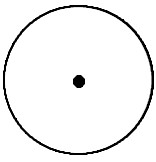 | = Capacity of the manifested. Original energy. Supreme unity. |
One gives birth to Two. 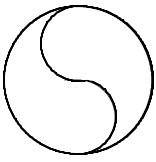 | = Duality, balance, and harmony are being energized The appearance of the two images of Yin and Yang. |
Two gives birth to Three. 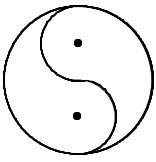 | = The manifestation of Yin/Yang, the interrelation, harmony which generates movement. |
| Three gives birth to all things. | The manifested World of form, consciousness can observe itself, creation. |
| All things have their backs to the female and stand facing the male. When male and female combine, all things achieve harmony. | I think that emotions, our bodily sensations, make us interact with each other, allow us to sit calmly in meditation or make us agitate in all directions. Resist or let go. Making an unmanifested space visible, creating from a manifested fixed point, an impression of expansion. |
| Ordinary men hate solitude. But the Master makes use of it, embracing his aloneness, realizing he is one with the whole universe. | Ki’Chi’Qi |
♫♫♫
Today, we have specialized everything to understand the details of things, but have we not lost sight of the overall plan of Life?
We all agree that We, human beings, are Alive and Conscious.
And if the Universe was Alive and Conscious too!
Isn’t it time to bring together Quantum Physics, Biology, Philosophy… in order to find the place of each thing in the great Universal whole of Life?
Isn’t it time to consider the Cosmos as a Living and Conscious Universe?
♫♫♫
We are the Cosmic Universe entangled in the Universe.
We are born as children, then adolescents, then adults. Our bodies grow. We are born, live, and die. Our earthly life is limited within a given space-time.
The Universe was born; it is the space that allowed atoms, planets… and us to appear. Its space is limited in time.
There is no expansion possible outside of the DAO.
If we put ourselves in the shoes of our ancestors who did not know that the Earth was round and vast, the more they advanced, the more they discovered, but the Earth was not expanding.
Water spreading across the ground obeys the laws of gravity; it moves and takes up more space, but it is not expanding. There is no more water on the ground than in the bowl that contained it.
I think it’s the same for the Universe. The more we increase our consciousness, and the precision of our calculations, the further we see, but the Universe is not expanding. I would say it’s like the Earth, water in a bowl, which have a finite space-volume in motion; the Universe also has a finite space in motion, the DAO. This is the best word I can find to describe it. The DAO is not accessible to our human perception, to our manifested consciousness, perhaps that’s why the brain « chooses » the word expansion which sounds false to me.
Unlike our ancestors, our brains have developed enormously since the Age of Enlightenment, allowing us to develop models and theories before experimentation. Whereas they experimented with things and then deduced models.
For me, the universe is not expanding;
models show us that there is something beyond
what our consciousness can conceive.
Bruce Lipton, in his book « The Biology of Belief », tells us that we have developed such a powerful brain that by analyzing situations, it can deduce truths that may be « false », but to which it clings and which blocks opportunities because « programmed misperceptions in our subconscious mind are not “monitored” ».
Candace Pert shows that our emotions are a bridge between our body and our brain, our mind. They could allow us to overcome false signals and stay on course for a harmonious life.
♫♫♫
Life is not an unlimited expansion for material experiences/creations; rather, it is a perpetual movement to achieve ultimate harmony. I don’t think that developing our brains or AI will solve the existential problems facing humanity.
It would be wise to stop for a moment, to make an interconnection of all our specializations, our emotions, to find the plan of Life on Earth and choose the right Way.
- Article of the portfolio: Describe the Physical Reality wich animates us.
- Article of the portfolio: The senses.
 Ki-Regeneration ®